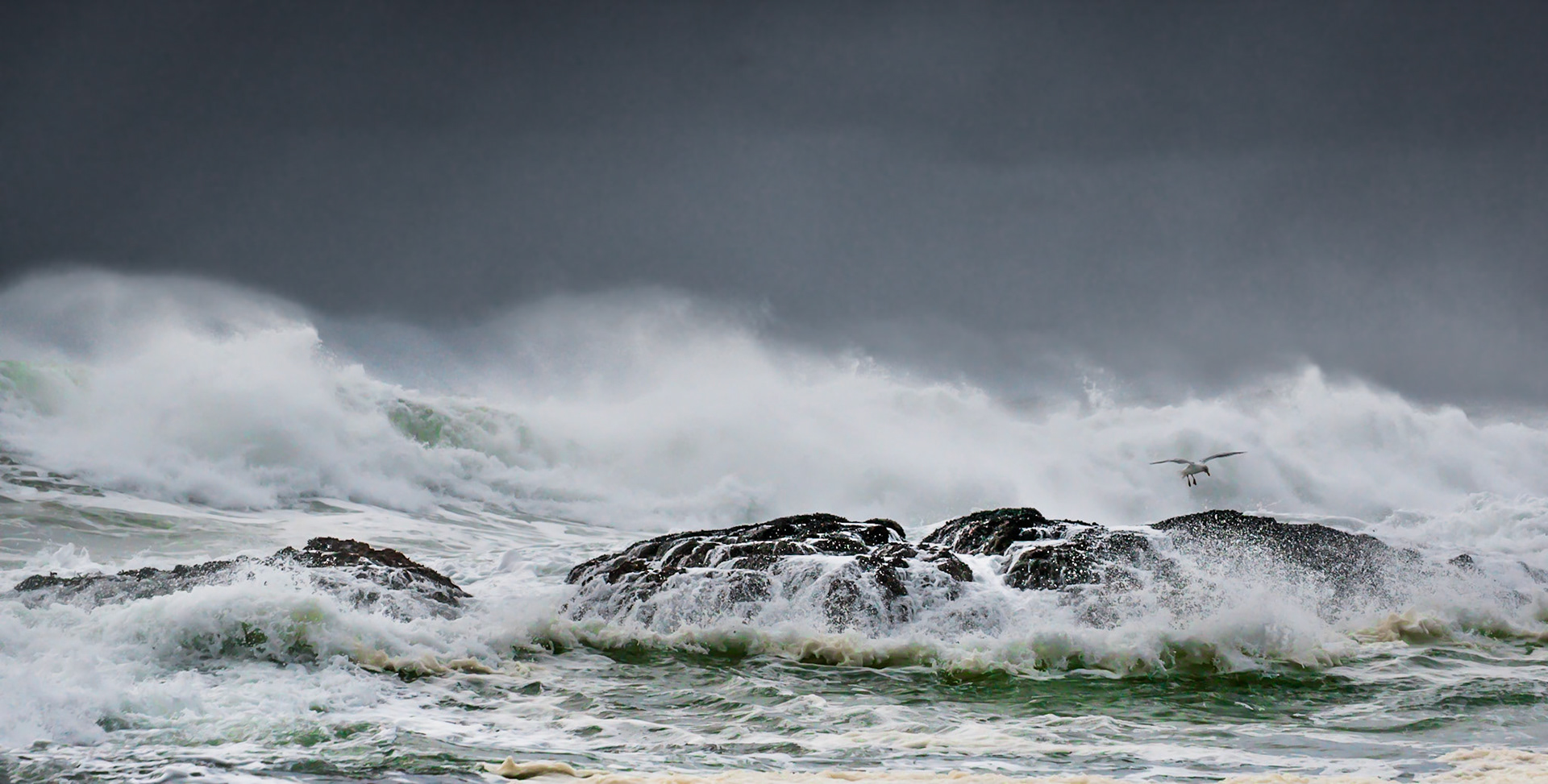
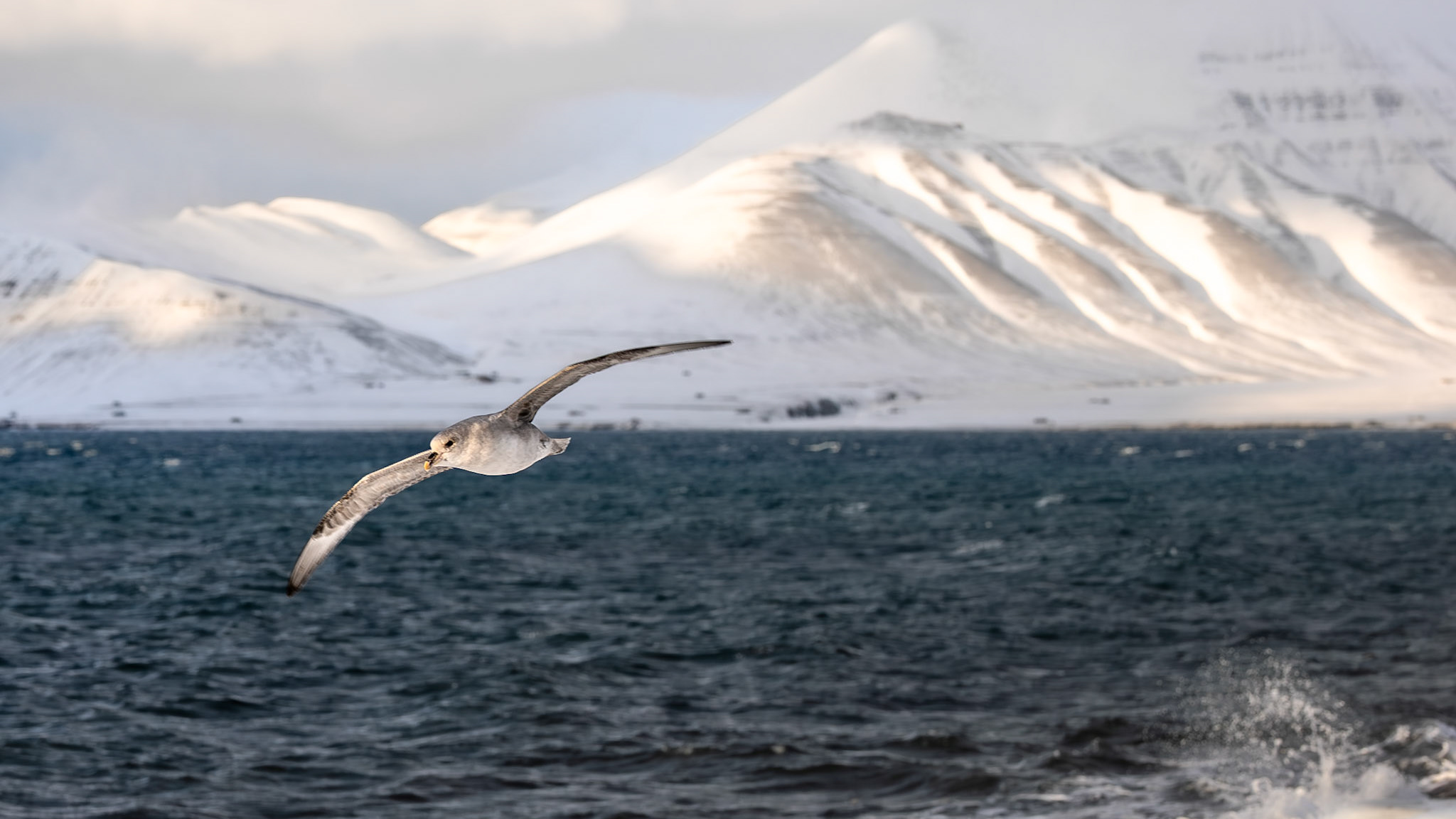
This image was taken when a series of late winter storms hit Vancouver Island’s pacific coast. While the majority of seagulls chose to remain safely on land, this one decided to challenge the storm, looking for rocks to land on, if only for a few seconds before being forced back into the air by the next crashing wave.
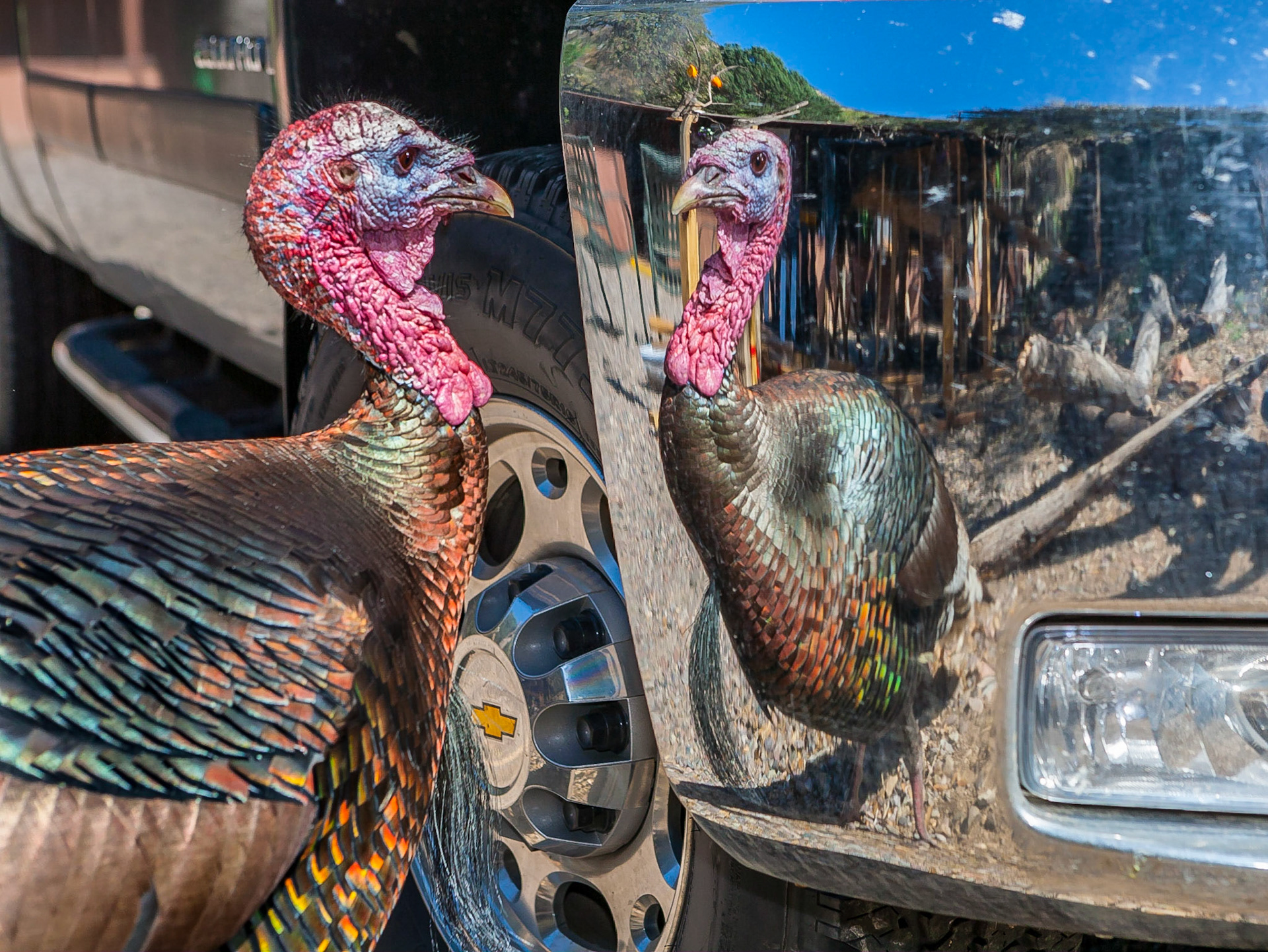
It was breeding season and all of the males were doing their best to put on a good show for the females. However, a number of the birds seemed more than a little confused. Not more than 20 feet away stood a group of females and a male competitor however this turkey was far more concerned with the potential suitor in front of him. He would approach the suitor and give him a good peck but for some reason the competition always seemed to be up for the challenge. He even tried to get around behind his challenger by poking his head into the wheel well but to no avail. His nemesis was no longer there but immediately returned once his head was removed.Species: Gould's Wild Turkey
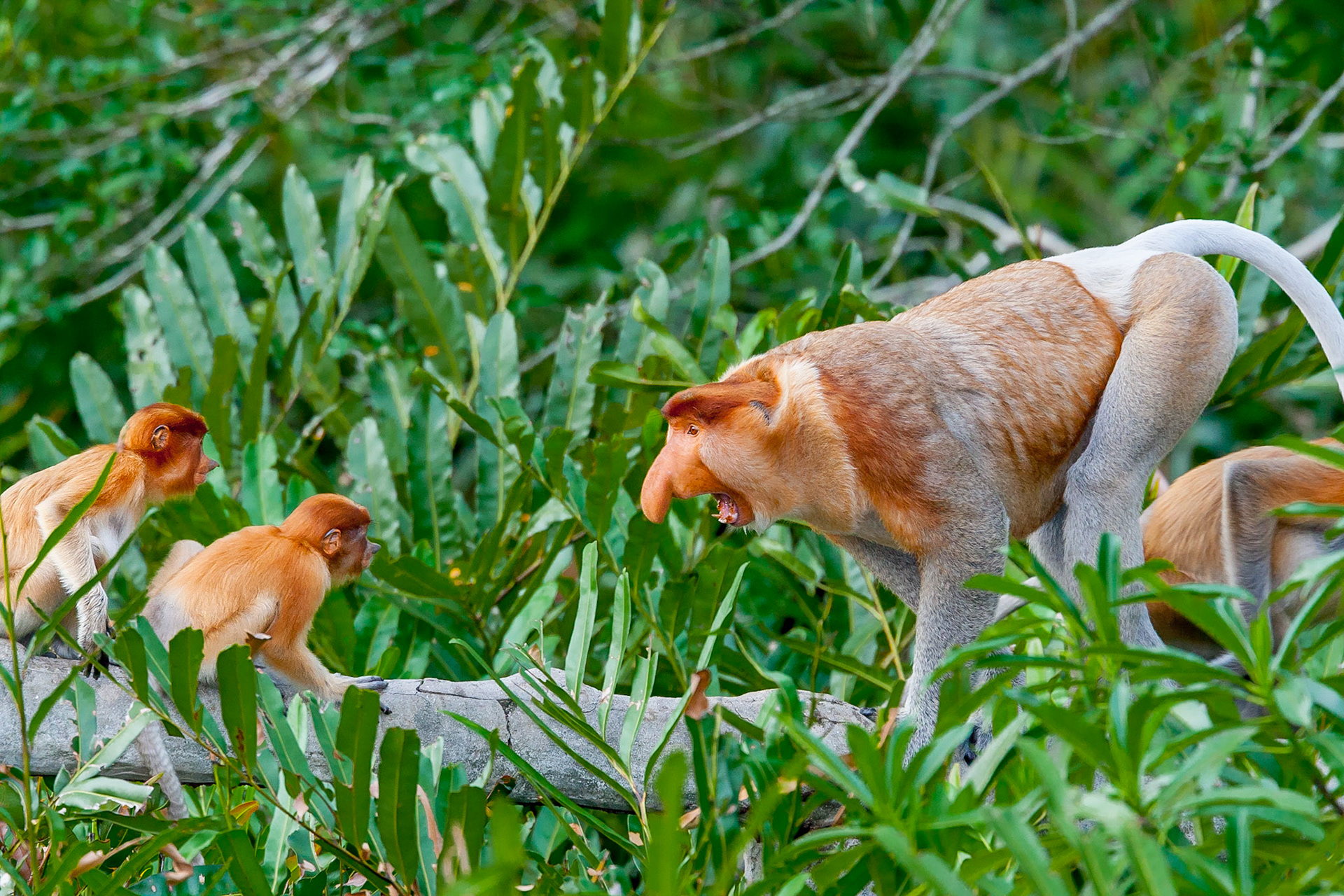
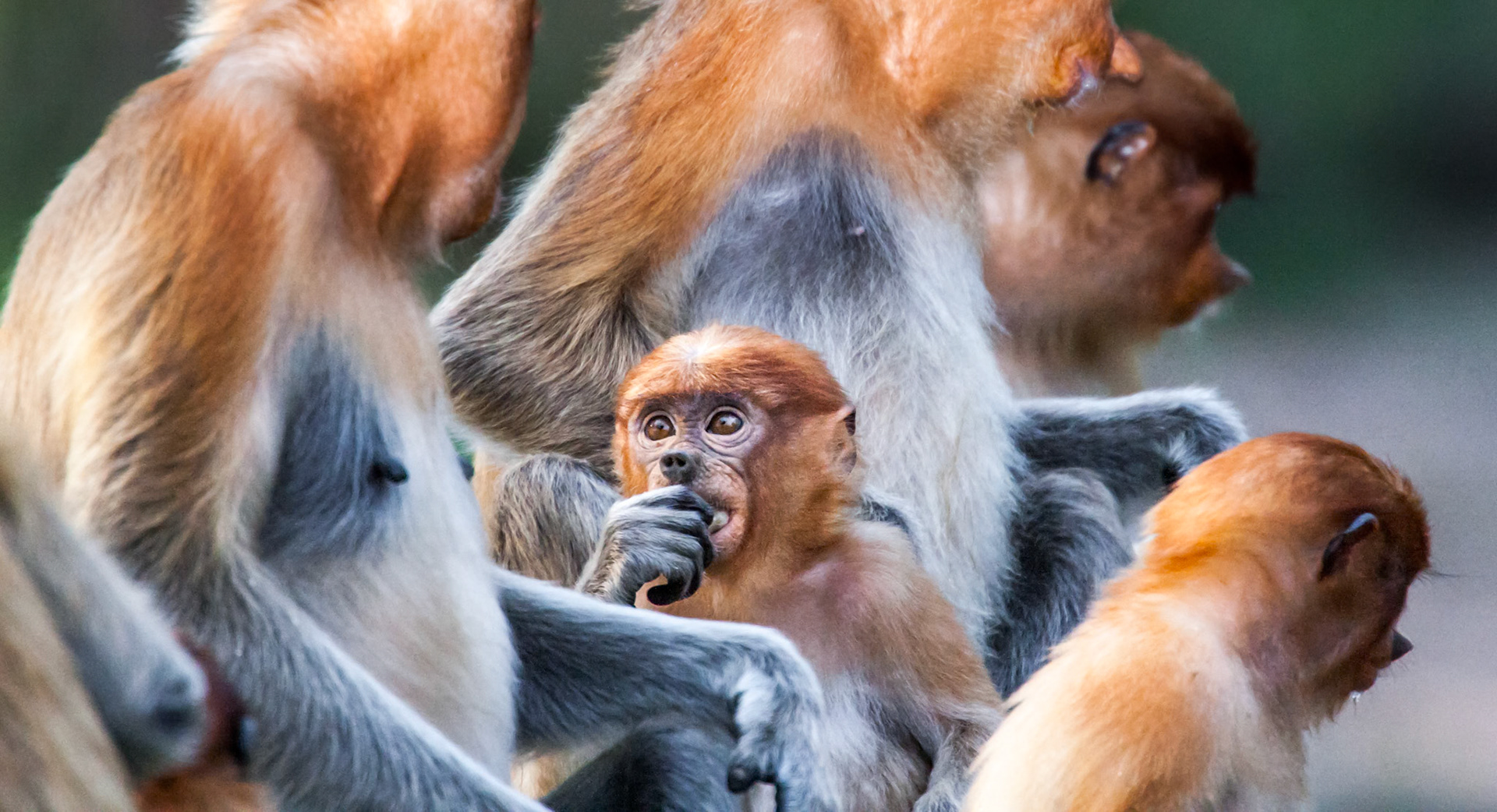
While visiting Borneo, we were able to watch a number of troops of endangered Proboscis Monkeys. While the dominant males with their harems normally reserve this type of dominance display for the bachelor males, in this case the two juveniles have done something to incur the wrath of the adult male and are being brought to heel.Image taken from an observation deck some 40 - 50 feet awaySpecies: Proboscis MonkeyPhoto conditions: The image was taken from a covered observation deck some 40 to 50 feet away from the photographed interaction. The Labuk Bay Proboscis Monkey Sanctuary is located on private land which would have been turned into palm oil plantation if not for this eco-experiment of dedicating some land to the endangered species. The project owners put out both food and water to attract the monkeys but do no interact with them and the monkeys appear or do not appear at their pleasure. The reserve is not fenced. Additional information available on request.Additional Equipmentflash: Canon 580EXtripod: Gitzo 1228ballhead: Really Right Stuff BH-55other: Better Beamer Flash Extender
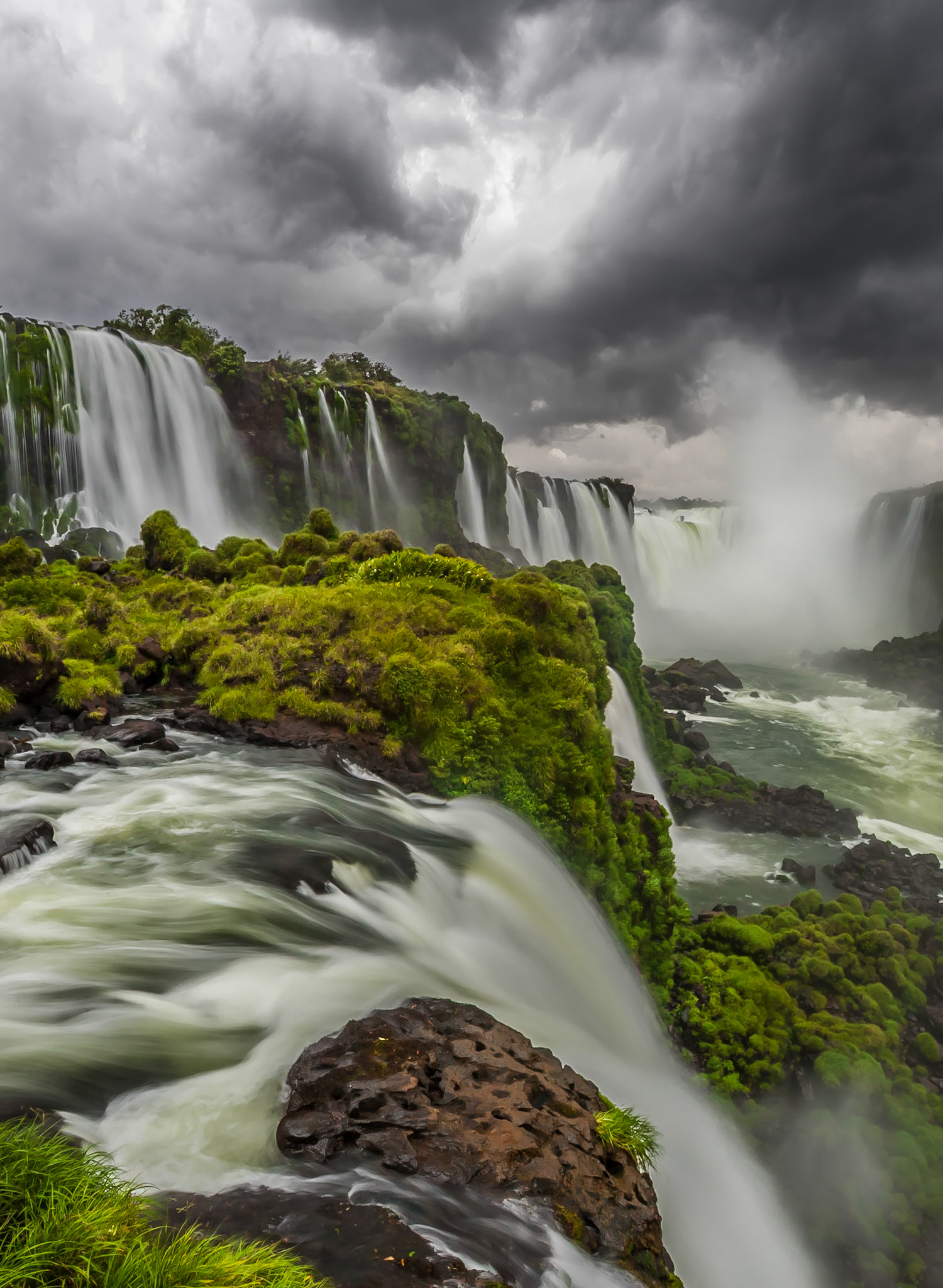
I arrived on the Brasilian side of Iguazu Falls late in the afternoon and had watched the clouds gather as we travelled towards the national park. Once in the park, it became a foot race down a jungle trail to reach a good view of Devil's Throat before the storm passed overhead. Iguazu Falls is one of, if not, the most impressive falls on the planet and easily outshines both Niagara and Victoria falls. Iguazu lies on the border between Brasil and Argentina. While the majority of the mile long falls area is found in Argentina, the most impressive portion of the falls, Devil's Throat, is best seen from the Brasilian side.Species: n/aLocation: Devils Throat, Iguazu Falls, BrazilAdditional equipmentTripod: Gitzo 1228Ballhead: Really Right Stuff BH-55Photographed using HDR tecniques
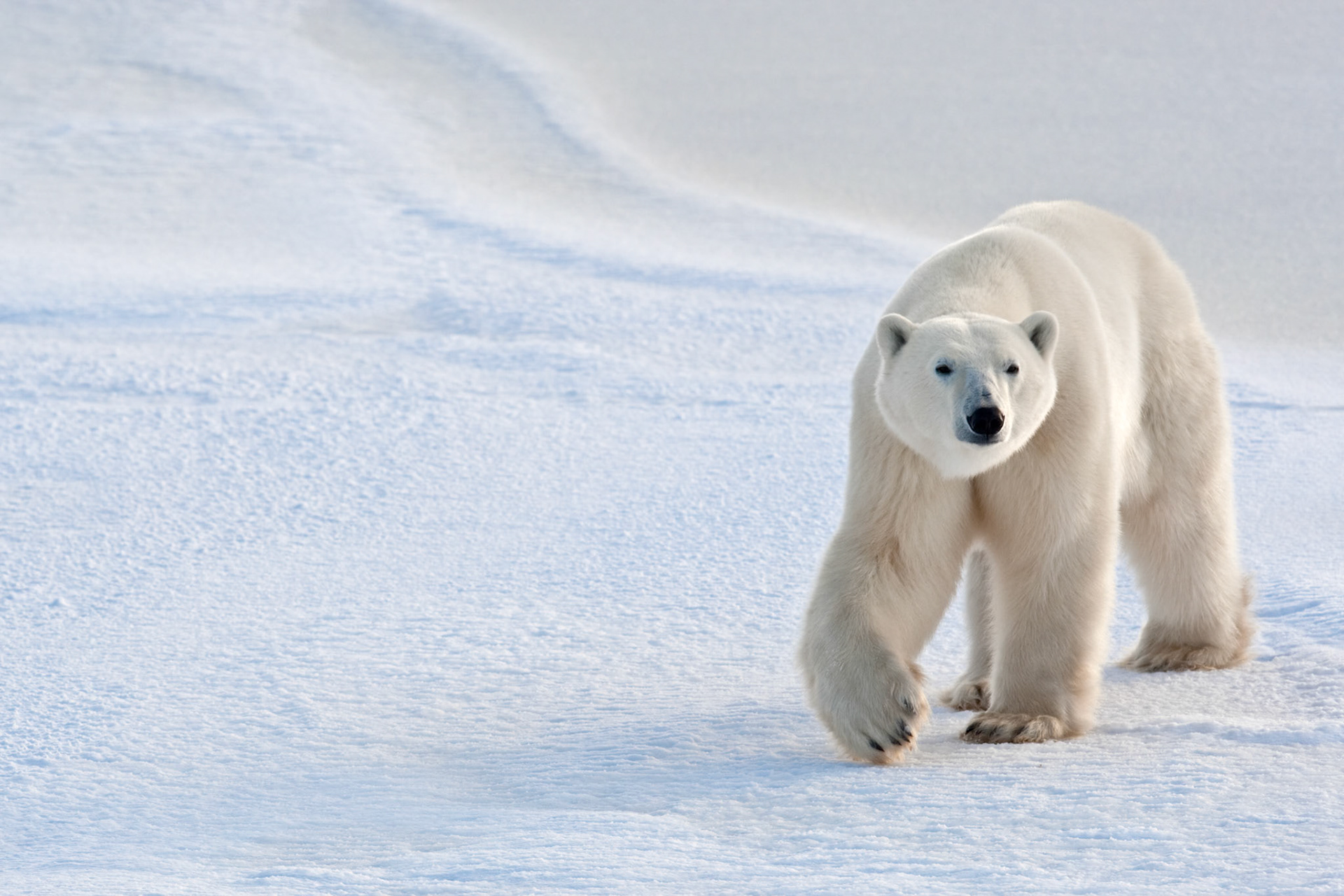
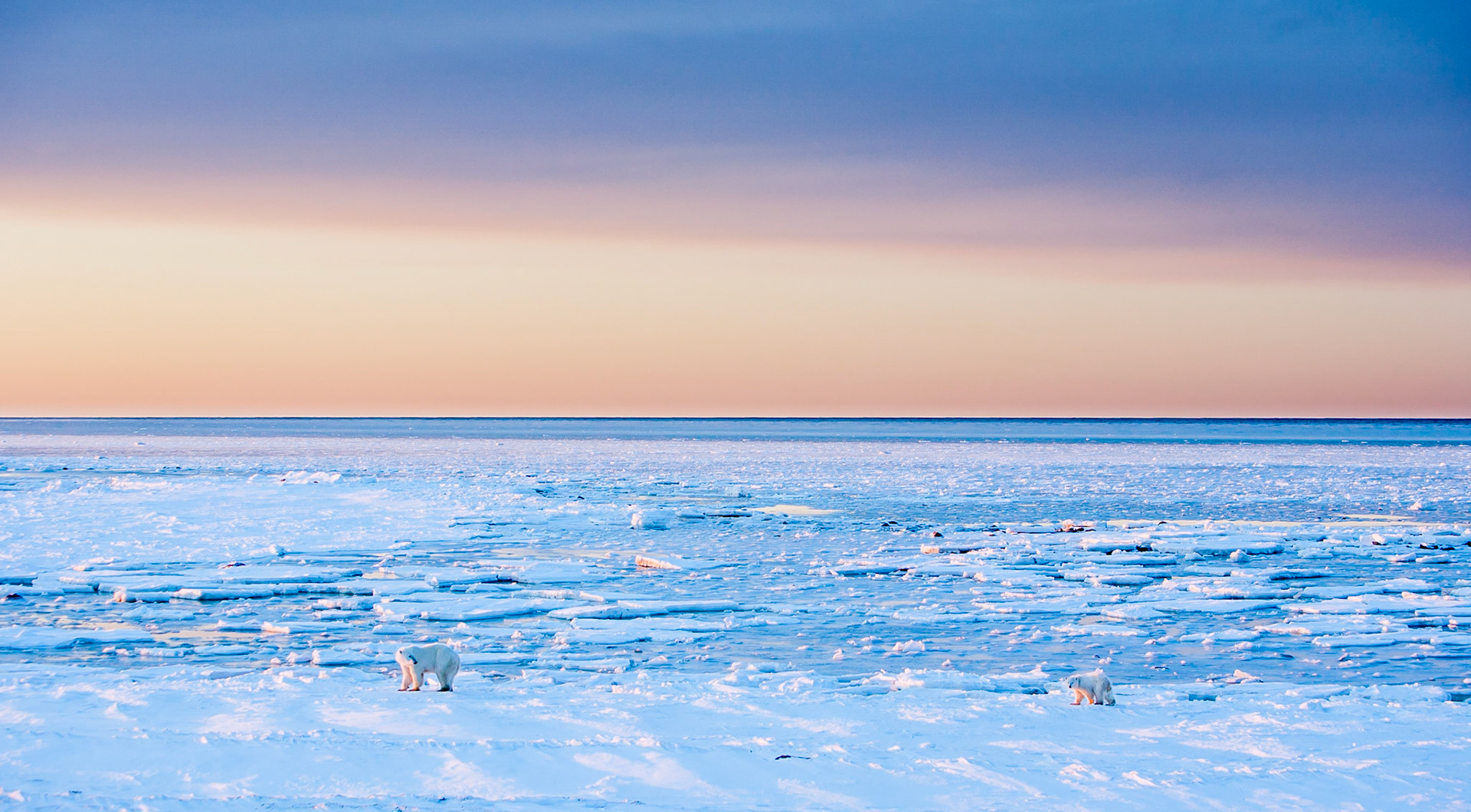
Every fall the Polar Bears of Manitoba congregate along the shores of Hudson Bay waiting for the ice tofreeze in the bay so they can break their months long fast and begin seal hunting again. This bear wastravelling toward the coast in early morning light near a frozen pond. The various textures of snow, ice,and drift lines were perfect complents to this traveller.
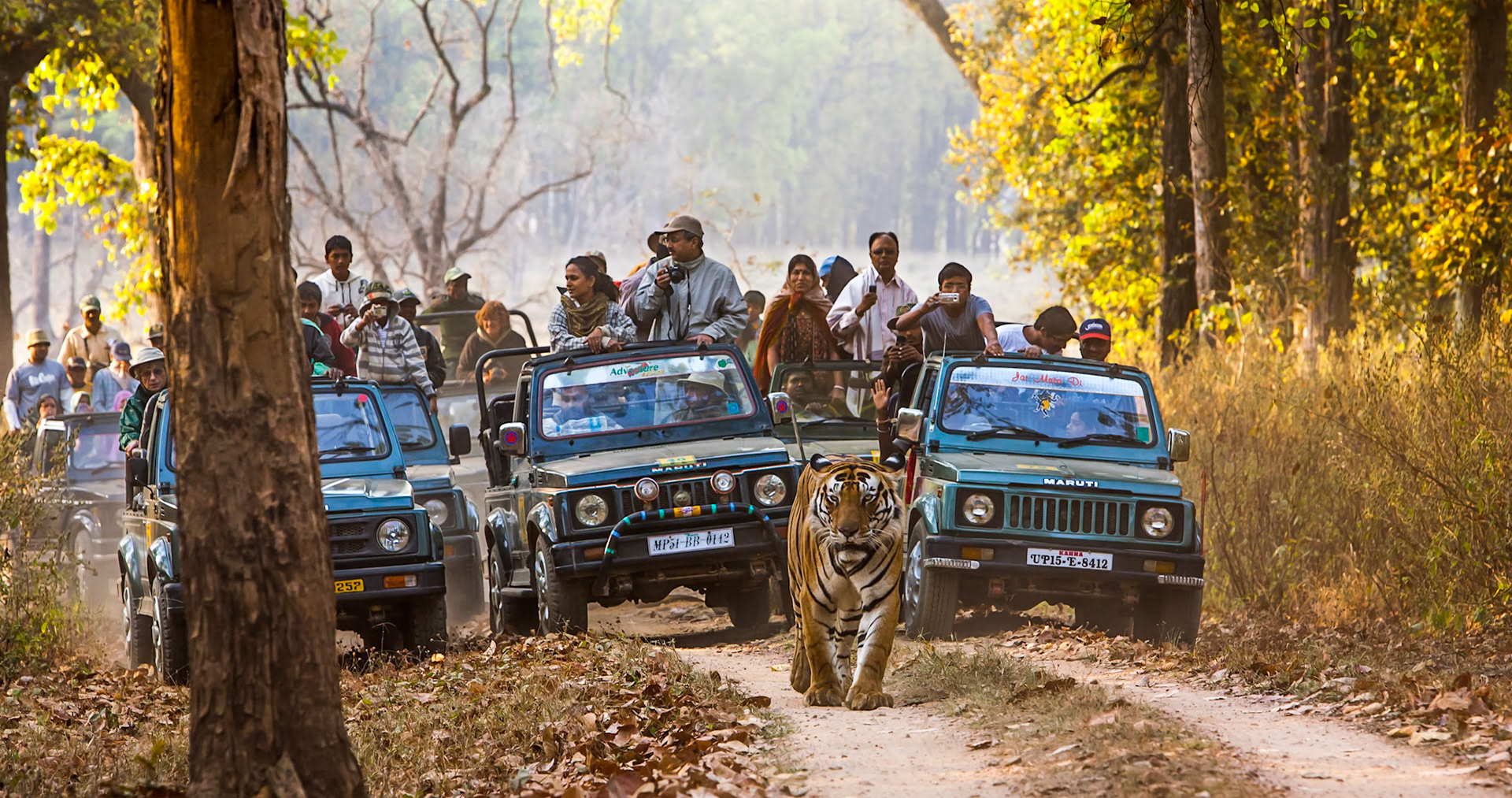
Tigers face many challenges with rapidly diminishing numbers as a result of loss of habitat, poaching, and accidents with vehicles within the park system itself. When we travelled to India, yes, we wanted to see the tigers but we also wanted to see other species such as the Indian elephant, rhinoceros, barasingha, and dhole (wild dog). What surprised us was the single minded obsession with seeing tigers that we experienced in the parks. When we stopped to watch a group of three Dhole in Kanha National Park, a far rarer sighting in our experience, we were actually berated by people in another vehicle because we weren't looking for tiger. The result, is that even in the few protected areas available to tiger, they are now being "hunted" relentlessly and pressured in the few areas left to them. In this image, we were extremely lucky. Our guide knew the tiger and knew that there was a good chance that he would travel up this road. This allowed us to get well in front of the cat and to capture this image. He said that, had the group behind stayed a respectful distance from the cat, it was possible that he would stay on the road for several kilometers. Our guide had seen it happen. As it was, the pressure from the people and vehicles behind (note the back-turned ears), forced this tiger to leave the road just seconds after this image was taken.Species: Bengal Tiger (Panthera Tigris Tigris)Location: Kanha National Park, Madhya Predesh, IndiaAdditional equipment: beanbag
Before the Hunt
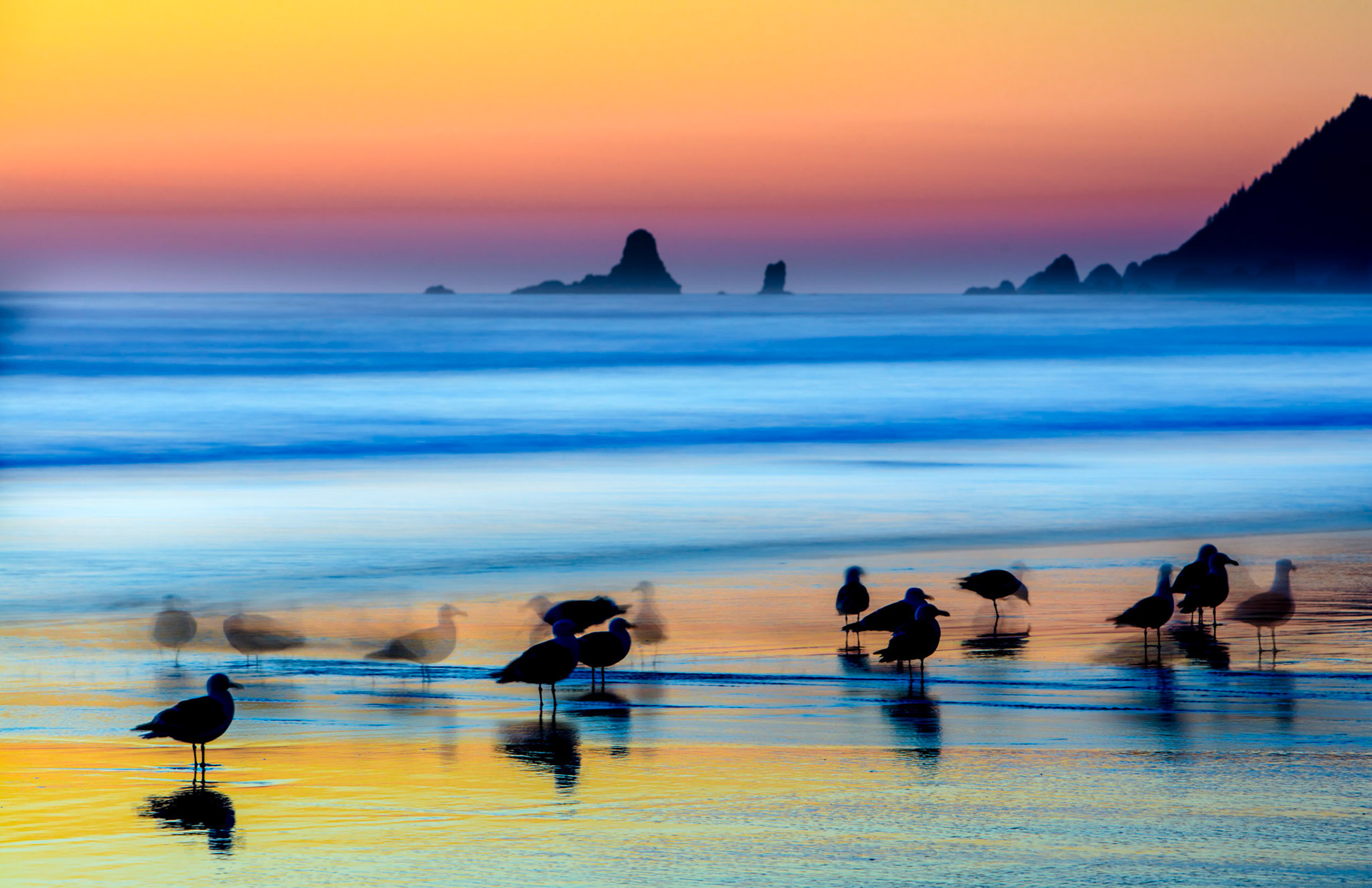
One of my favourite times to photograph is after sunset. It gives you more time to show the passage of time and you can't always be certain of your results. What will happen if you open the shutter to the world for six seconds instead of a fraction? How will the world change? Will the scene in front of you hold sufficiently constant or will the natural chaos of nature tear it apart? The waves disappear but the surf remains; the rock holds constant while life moves on or sometimes holds on for just long enough to leave an impression.
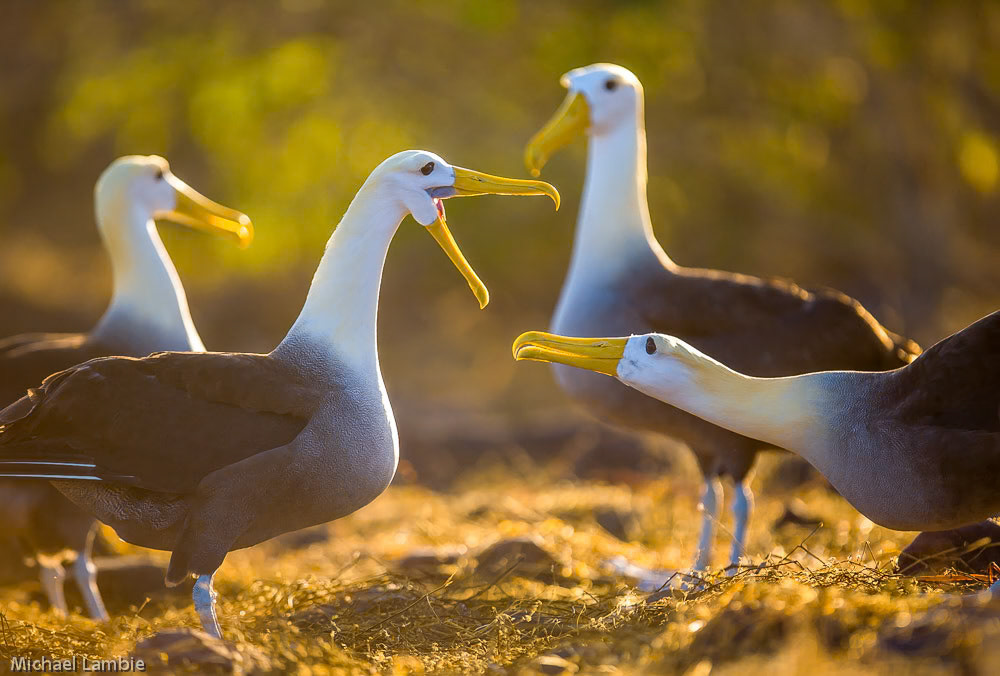
All Albatros go through a complex mating dance when reuniting with their partners. In this image, two Waved Albatros look on as another pair reunite in the Galapagos
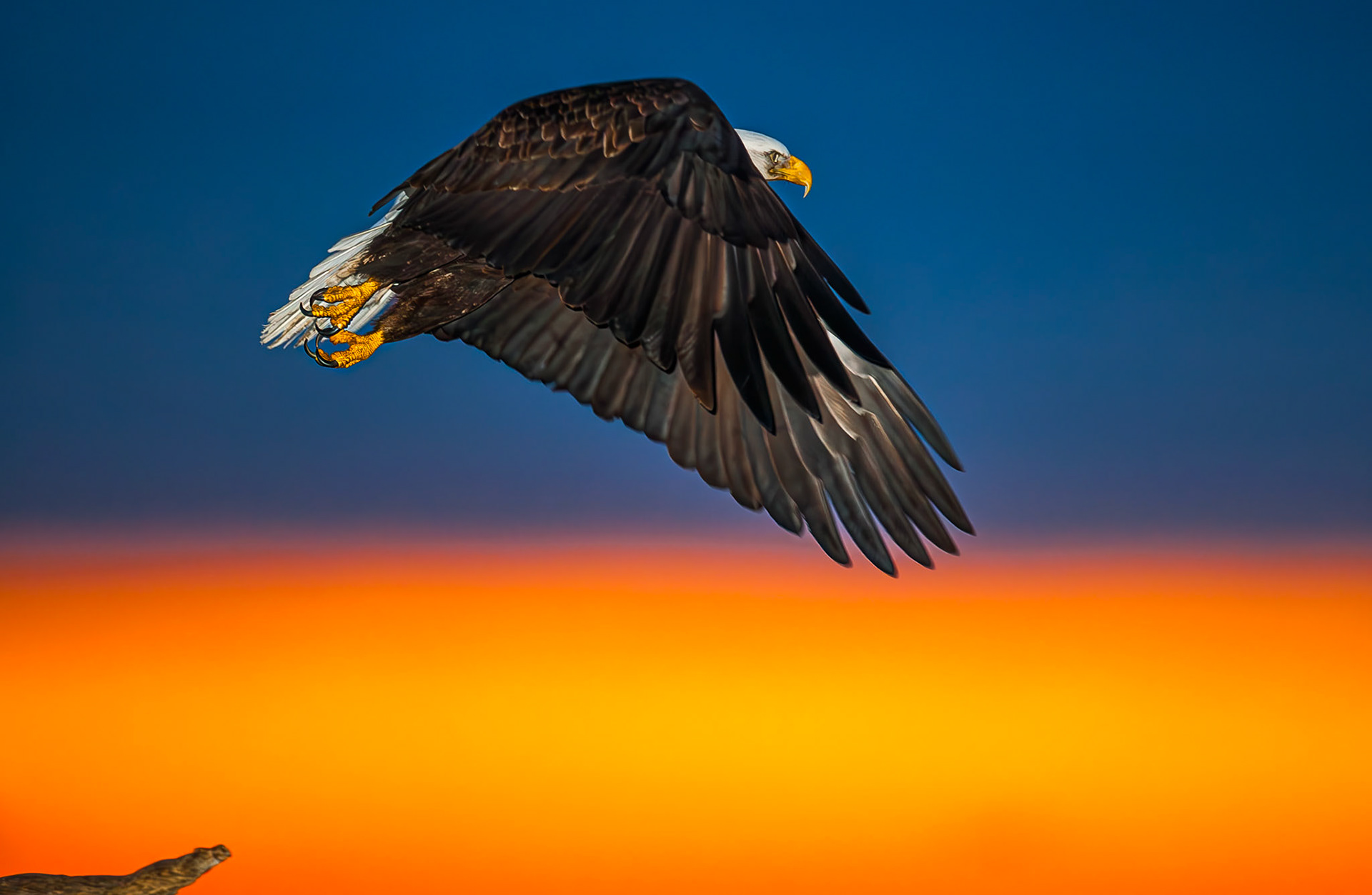
This evening started with a very unusual Alaskan sunset. THere were no clouds in the sky, but As the sun lowered, atmospheric conditions and the sun reflecting off the water created the illusion of a second orange sun in an orange sky. The closer the real sun came to the horizon, the stronger the reflected sun appeared within the band of orange. As the sun dropped below the horizon the sky darkened but the band of orange became even more intense as if the earth was actually circling a giant orange star. I was able to watch end enjoy the most unique sunset I have ever witnessed because my camera with flash, flash extender, and remote trigger was trained directly into this sunset and just to the right of a roosting bald eagle. I had hoped that the bird would fly off into the sunset but as the light started to fade, so did my hopes. Without warning, the eagle flew and out of instinct, my thumb tripped the shutter. I had only one shot but it had everything I had hoped for.
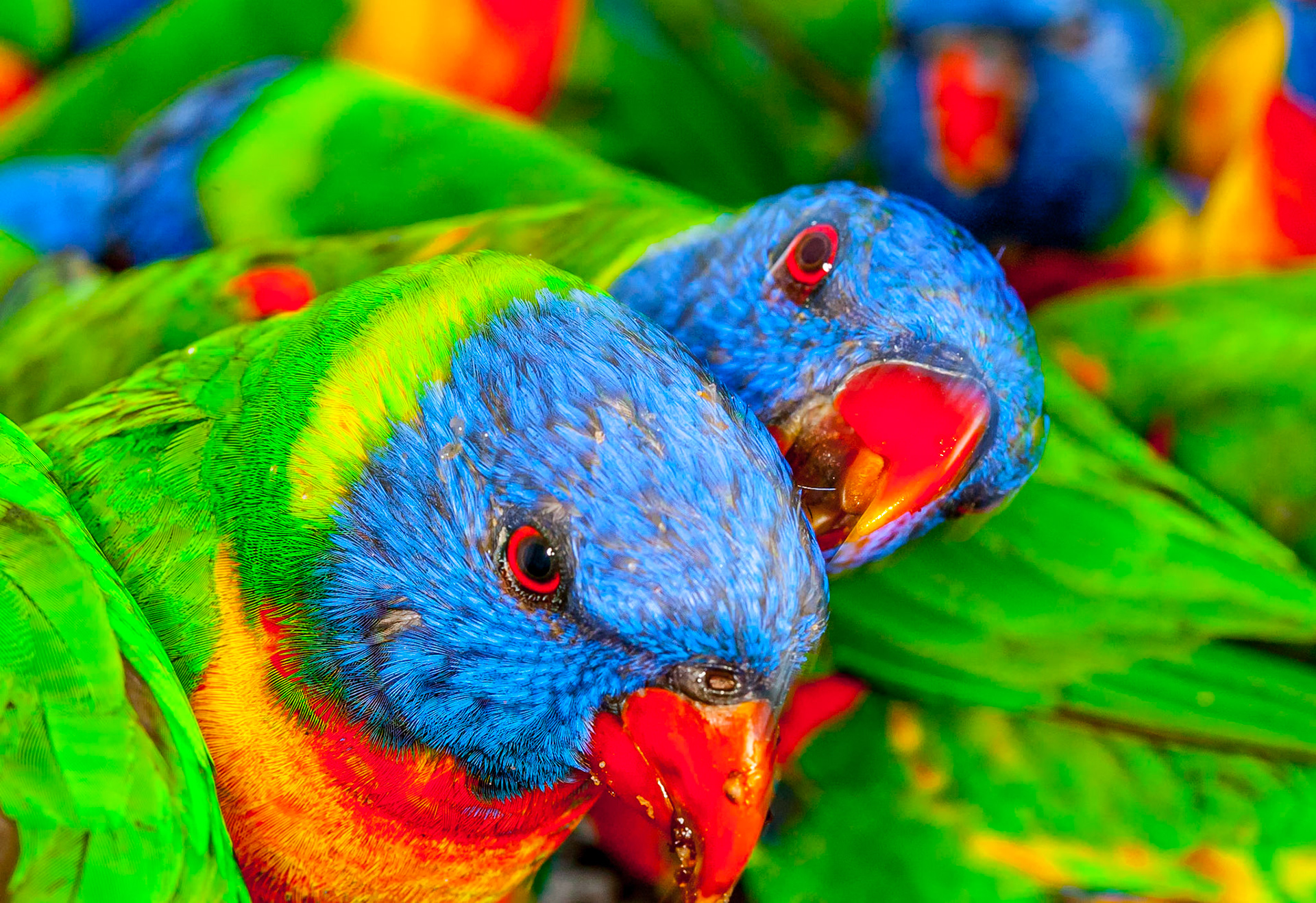
The Rainbow Lorikeet is brash, colourful, confident, loud and unafraid of humans. I successfully captured this image of a small flock of lorikeets feeding as a group in a park. The image features a young lorikeet attempting to convince its parent that it still deserved a hand out. The parent, however, wanted no part of this arrangement.Species: Rainbow LorikeetLocation: Magnetic Island, Queensland, AustraliaFlash: Canon MR-14EX II Macro Ring Lite
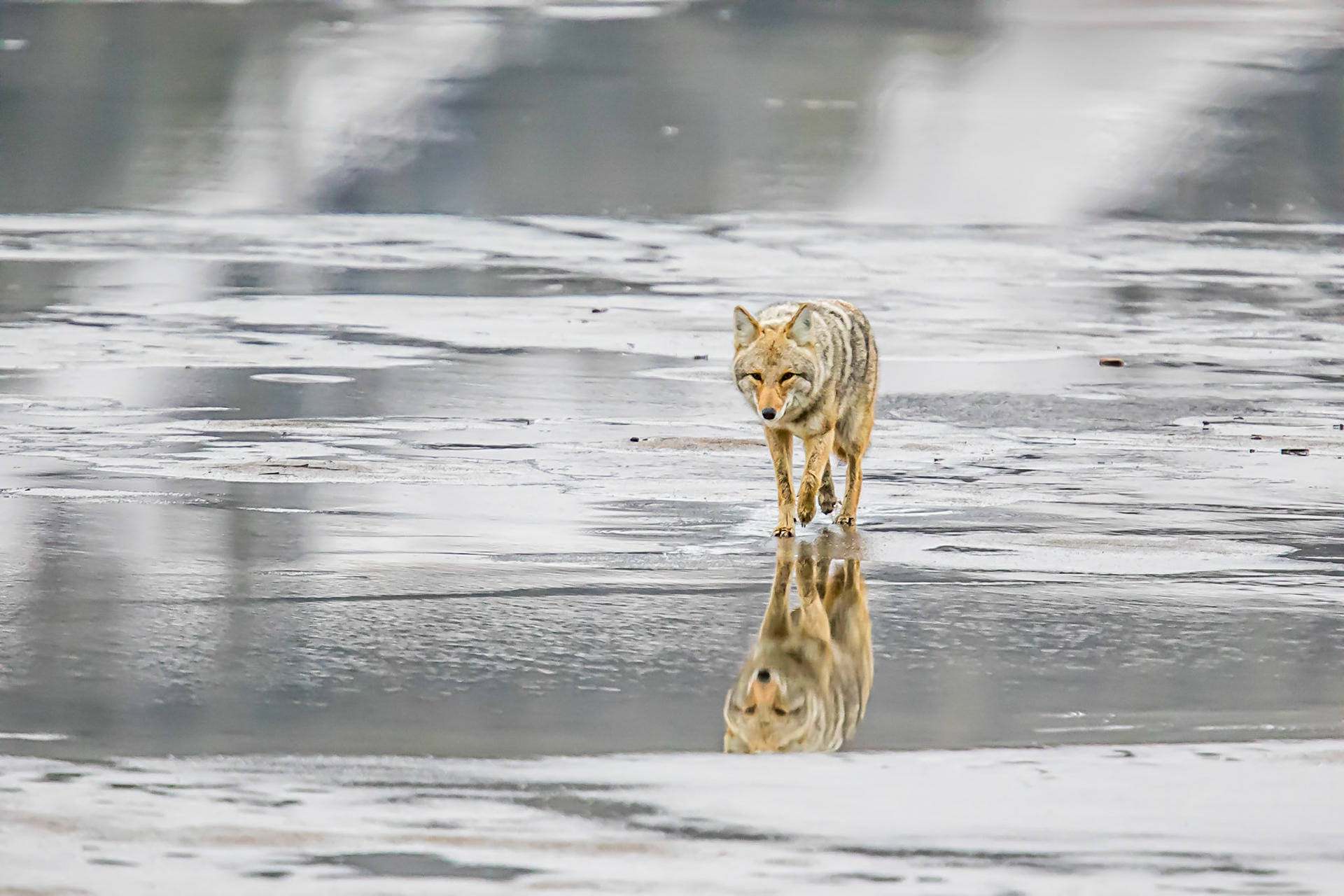
I had spotted the coyote two days earlier travelling in the wet sand bordering the Athabasca river in Jasper National Park. Unlike the coyotes of Yellowstone, which can be accustomed to people, this one was only comfortable when the human stayed in the vehicle.The river bed was obviously the coyote’s territory as it could be found roaming the same general area each day searching for potential prey and each day, I made multiple trips into the area. This day was different from the previous ones in that the sky was extremely dull and overcast. The result was that the water and wet sand took on a colourless, silver sheen. I found an area of the riverbed that was free from large distracting objects such as logs and rocks, setup the camera to slightly overexpose images thereby accentuating the silver and waited. Luckily, the coyote came through the area and I was able to capture one image with the coyote’s body as the only colour and a full reflection in a small pool of water.
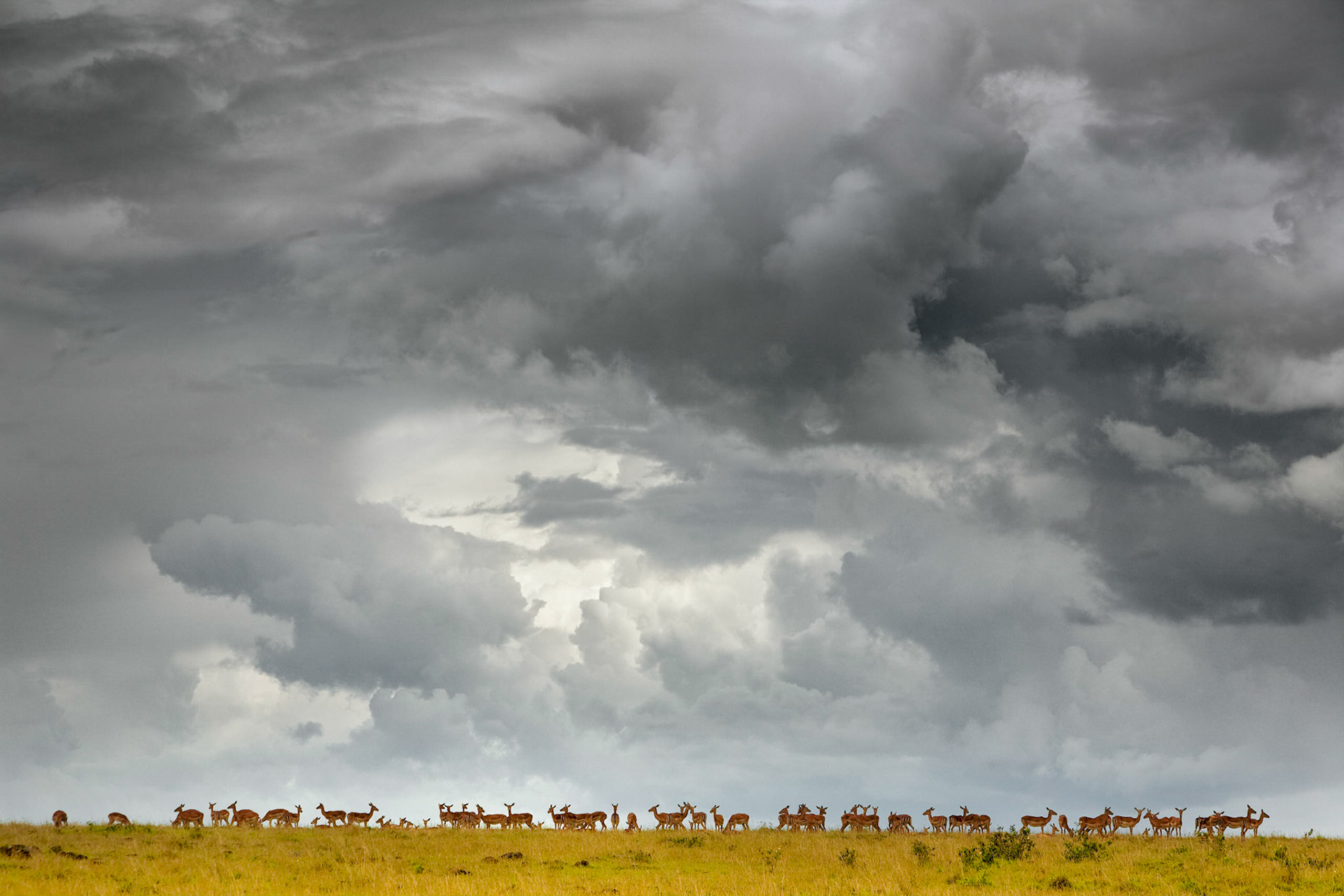
After a full day of watching cheetah and other wildlife on the plains of the Maasai Mara, we were returning to camp with the sun low in the western sky. Travelling north, a herd of impala appeared at the top of a hill with heavy clouds as a back drop. While the Impala appeared relaxed, it was very unusual to see so many of them with their heads up.The scene summed up the East African plains in November, where towering clouds build up through the day frequently leading to afternoon or early evening rains.Species: Impala (Aepyceros melampus)
Location: Maasai Mara, KenyaOther equipment: beanbag
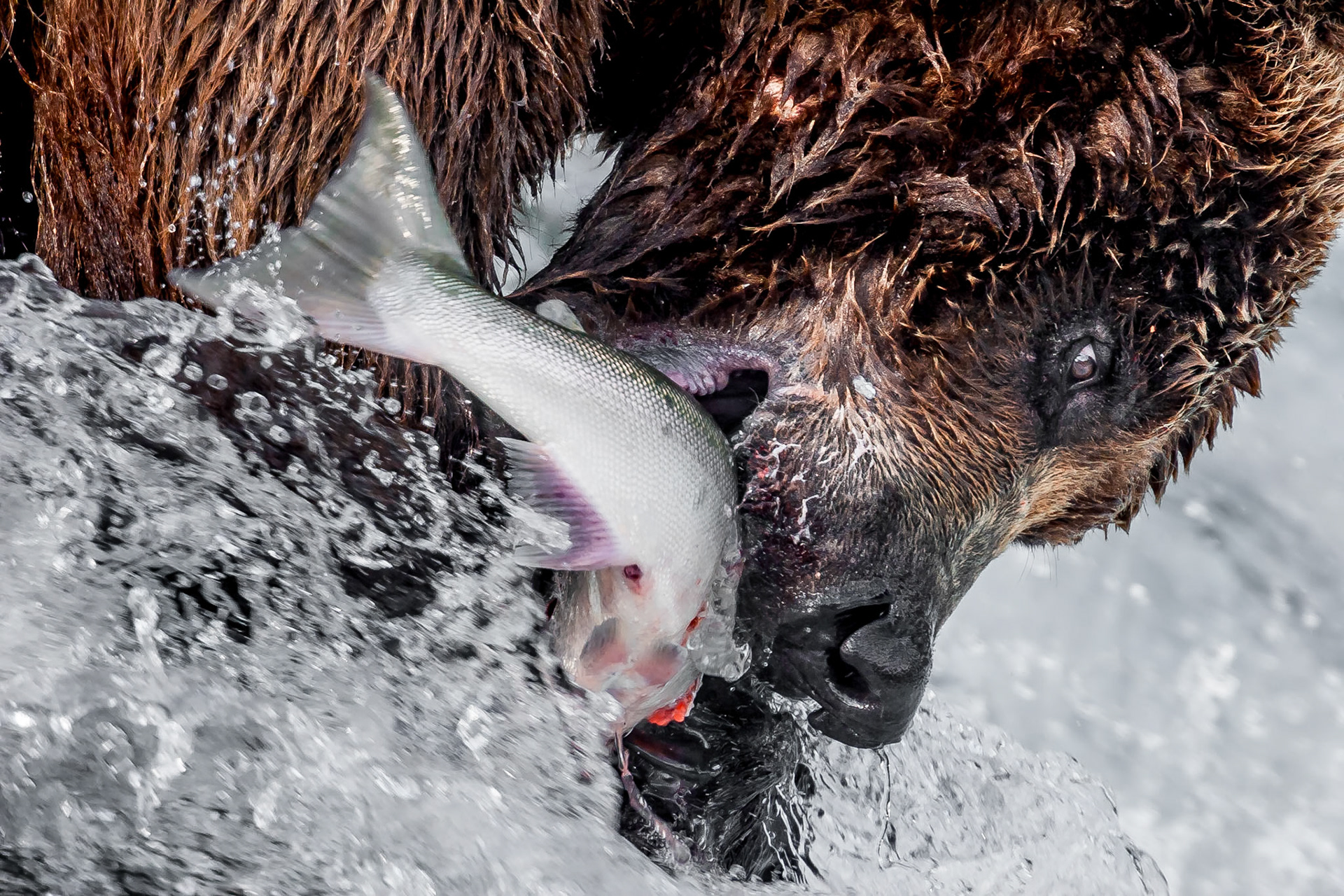
I arrived at Brooks Falls in Katmai National Park, Alaska just in time for the beginning of the salmon run. This is one of the few places in the world where brown bears co-exist with each other and humans in relative peace and safety because the quantity of food available. Mothers with cubs are still wary of the larger more aggressive males but where they would make a hasty retreat in other places, here they just keep a careful watch.This incredible location allows one to see mothers catching fish to feed to their cubs while the cubs look on attentively to see how its done, young adults on their own for the first time developing their own fishing technique highlighted by frequent failures and hours spent in the pursuit of a catch, and finally, experienced adults that walk in, catch a fish, and leave, all in the span of a couple of minutes. All of this activity can be viewed from a single location along with the requisite bald eagles, gulls and other birds which call the river their home.While I created many images, one goal was an intimate image showing the relationship between bear and fish. I chose an exposure that was slow enough to show some movement in the water and the fish but fast enough to freeze the bear as he caught his next meal.
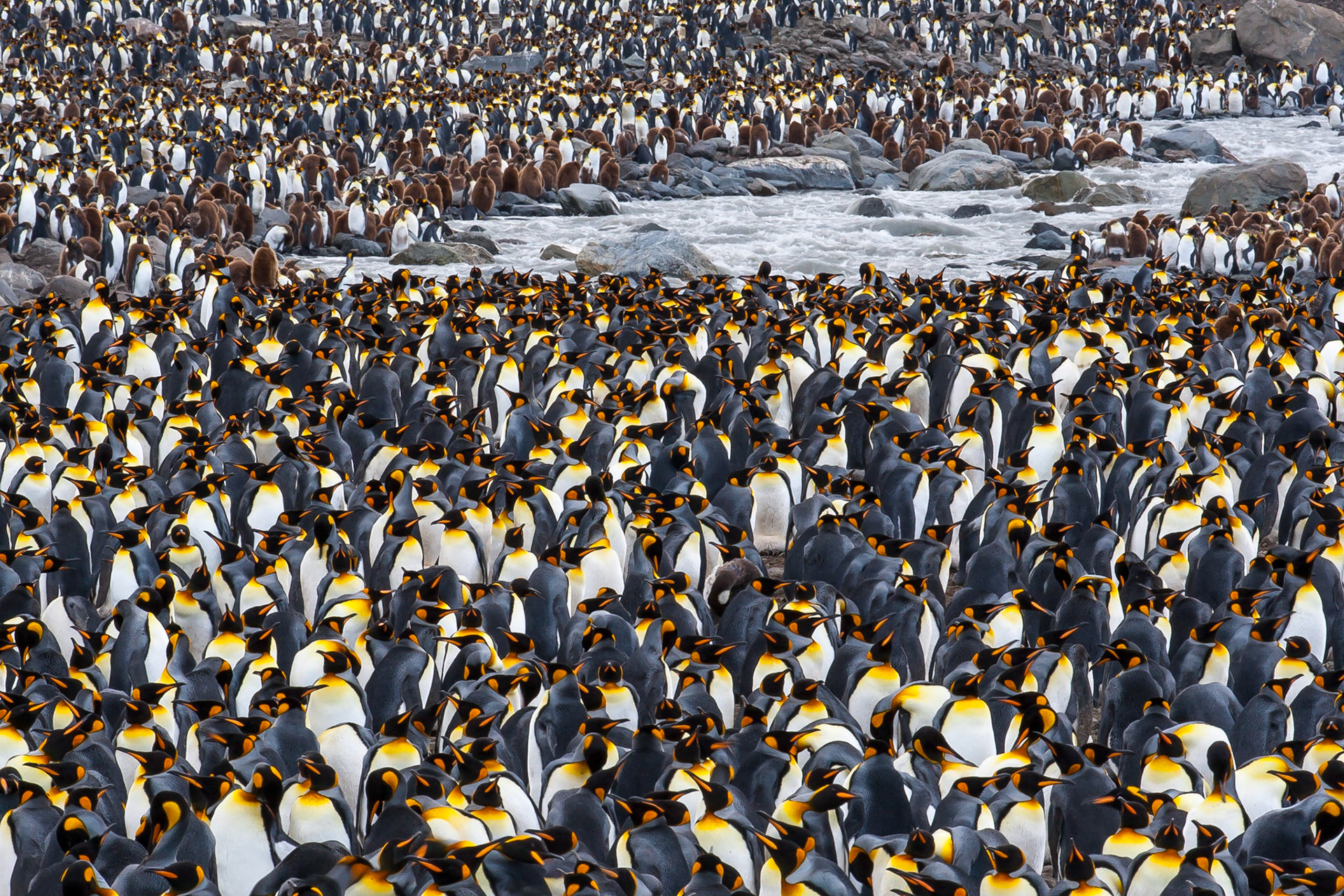
Salisbury Plain on South Georgia Island is a truly amazing place. There are approximately 100,000breeding pairs of King Penguins. For years after their initial discovery, it was believed that the darkbrown penguins were a different breed entirely from the Kings. In actual fact, these are the chicks,roughly one year old and hatched the previous year. The chicks will moult their brown features and takeon adult plumage more than a year after they are born. This image was taken in mid-January. Most ofthe adults in this image will be incubating an egg which is balanced on their feet and covered with a flapof skin to keep it warm.
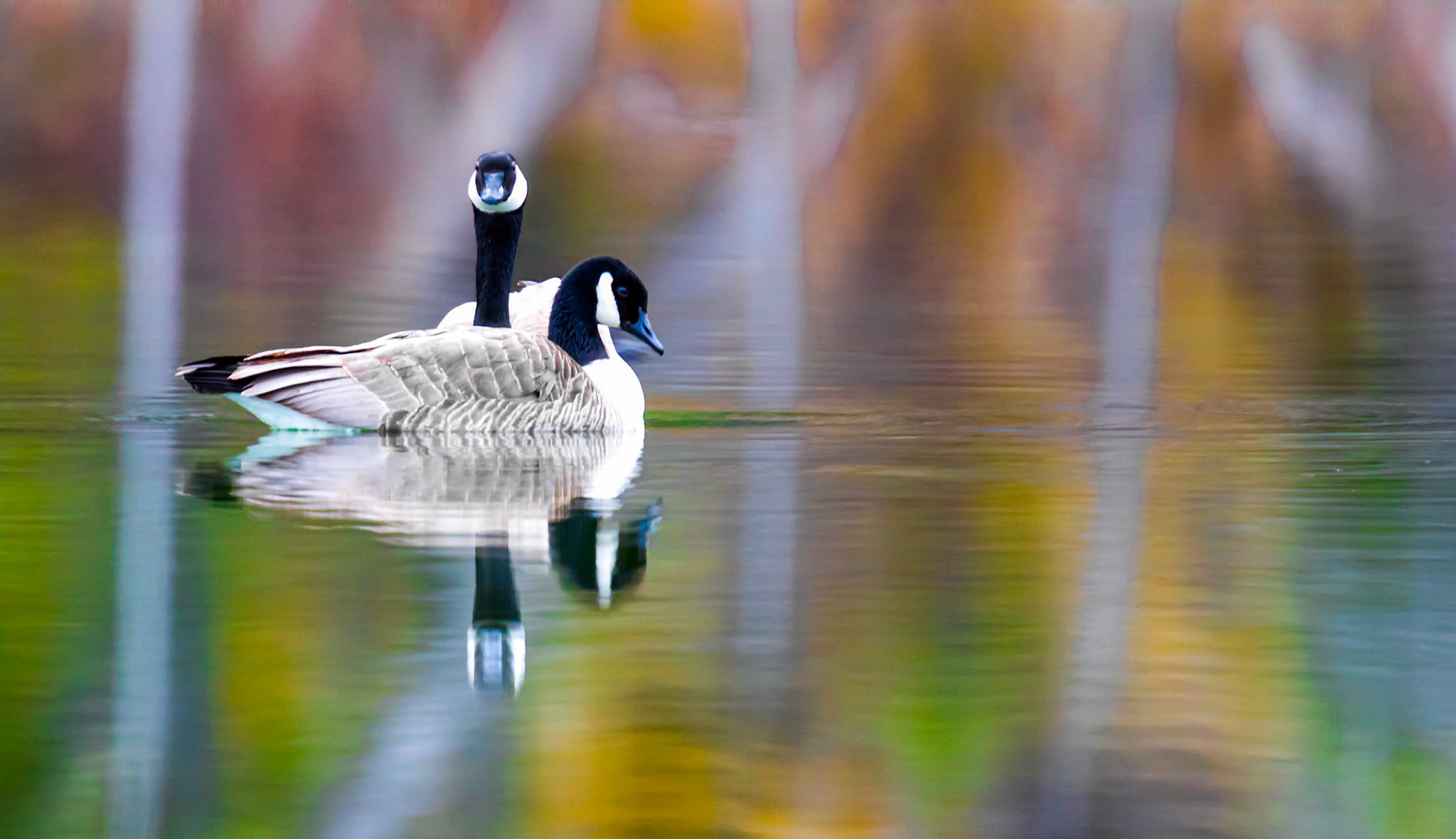
It was an unusual spring day in Jasper – the wind wasn’t blowing. Each day I since arriving in the national park, I had passed this small and not noticed it but today was different. The surface of the water had become highly reflective, showing the reds and yellows of the previous autumn along with the evergreens.While the small lakes in the area were still frozen, this pond had melted and attracted one of the first pairs of Canada Geese to return to the area. Looking through the lens, the birds appeared to be suspended in an abstract world of colour unlike any I had seen before.Each day, I returned to the pond but so had the wind and with it, the illusion of geese suspended in a world of colour was gone.
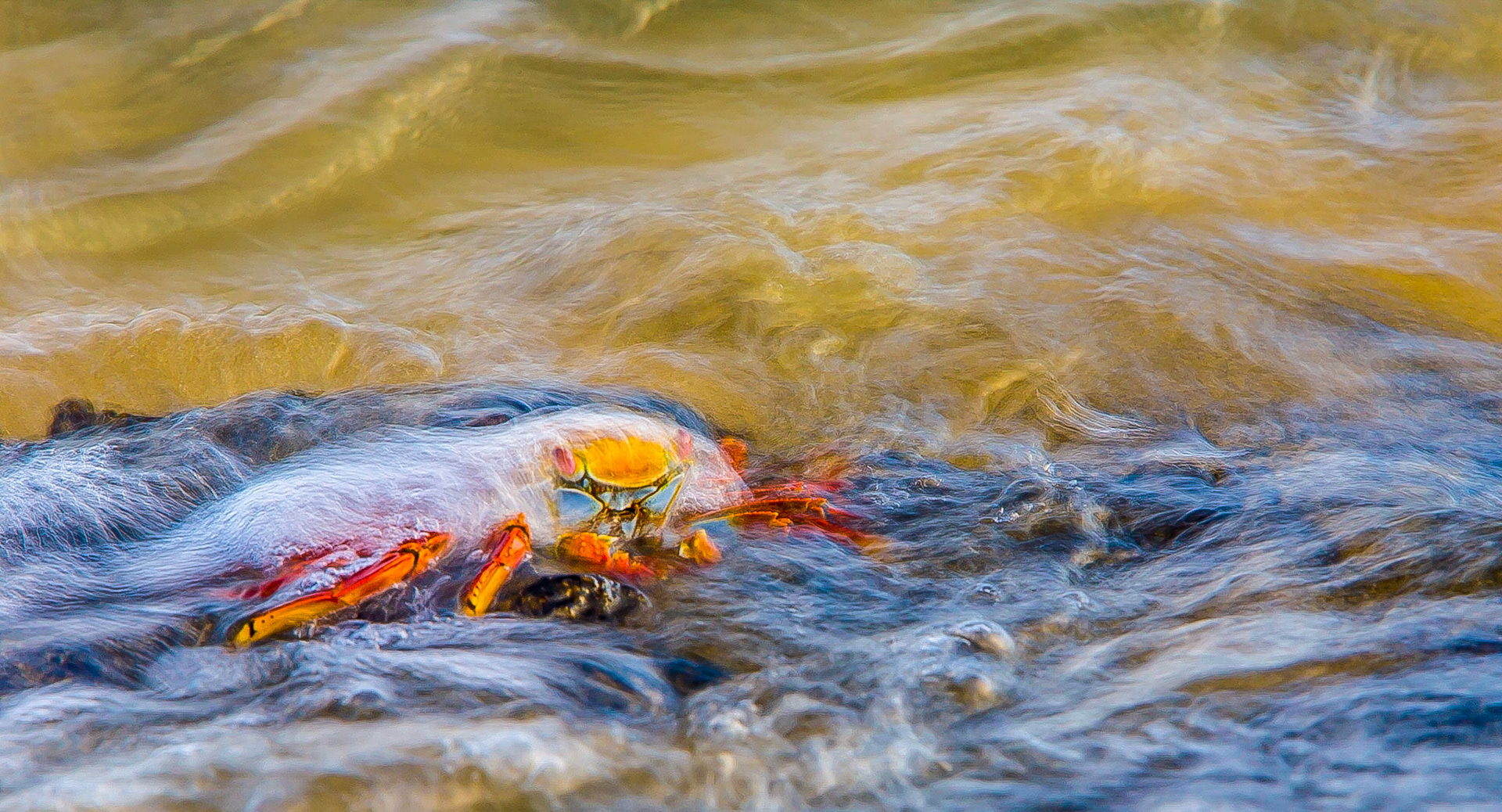
Sally Lightfoot crabs start their lives without any of the bright colour of their parents. Speckled black is the order of the day to maintain camouflage against the black rocks and stay hidden from predators. The reason is that as youngsters, their shells are relatively soft. By the time the crabs have reached maturity, their shells have become extremely hard, helping to protect them from their many predators. As adults, they display their unique and bright red, yellow and blue shells. Along with their shells, their extremely fast, agile and strong legs make theses crustaceans a difficult catch for predators.Sally Lightfoot crabs spend most of their time just above or below the surf. This one was sitting atop a rocky outcropping in the Galapagos. Each incoming wave left it unphased and firmly grounded to the rock. The image uses a slow exposure to accentuate the flow of the water coursing over the crab and rocks.Location: Galapagos, EcuadorSpecies: Sally Lightfoot Crab
While waiting at the Tsawwassen ferry terminal, which links Vancouver to Victoria on Canada’s west coast, I spotted a cormorant that had settled in for the night on a piling. The bird, so small in contrast with the massive loaders and cargo ships that travel between Vancouver and Asai, still succeeded in standing out, highlighted by the last vestiges of the setting sun.With the stationary cormorant, I was able to use a long exposure to smooth the water and accent the calmness of a day that was almost complete.For me, this image has come to represent much of the state of the world where nature is completely dwarfed by the activity of humans and if it is extremely lucky, it just manages to fit in. If it isn't, it is simply wiped out.Location: Tsawassen Ferry Terminal, Tsawassen, BC, CanadaSpecies: Double-crested Cormorant
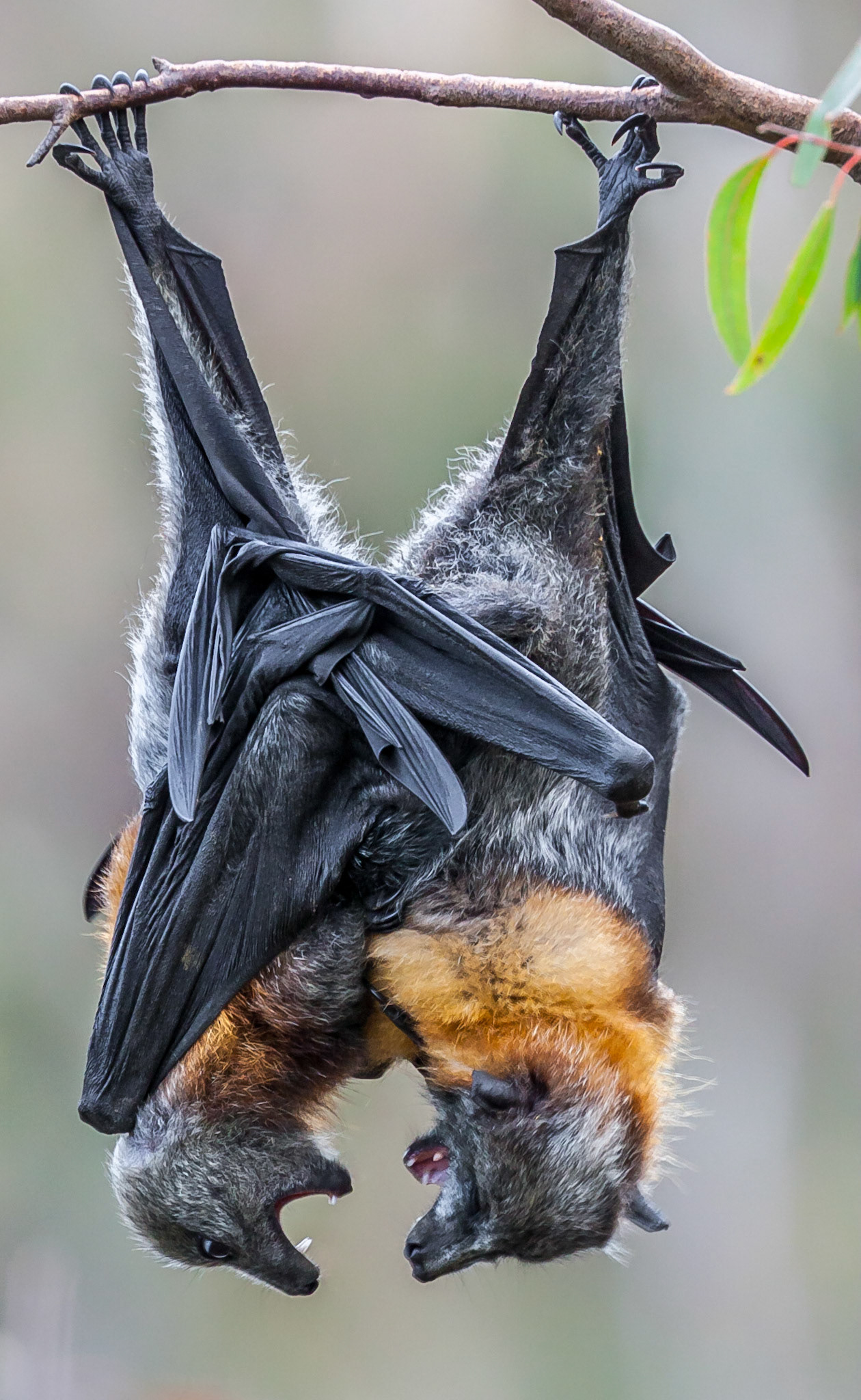
While overall bat populations are in constant decline, colonies of Flying Fox, Australia's largest bats, can be found if you know where to look. One location is Yarra Bend Park outside of Melbourne. The bats diet consists of a variety of fruits so the colony's size changes constantly over the year depending on where ripe fruit can be found. The Yarra Bend population ranges is from 5,000 up to 20,000 individuals during the breeding season and when there is food to be found locally. It is an incredible sight to watch a large colony of flying fox, with wing spans up to one meter, depart at dusk in search of their night's meal.A little over a decade ago this entire colony was located at the Royal Botanical Gardens in Melbourne. When the society running the gardens decided that the bats had to be forced out, it set up a confrontation between environmentalists and the society. The fallout from this process clearly shows that there is no shortage of fear and complete ignorance of the bats' important position in the ecosystem with some Australians writing that all the bats should simply be wiped out.Within a colony as large as Yarra Bend, there is always competition for the best day time roosting sites. I watch for an hour as these two males vied for a favourite spot to hang out.Species: Grey-Headed Flying Fox (Pteropus poliocephalus)Location: Yarra Bend Park, Melbourne, Victoria, AustraliaIUCN Red List status: vulnerable
Sunrise Smile
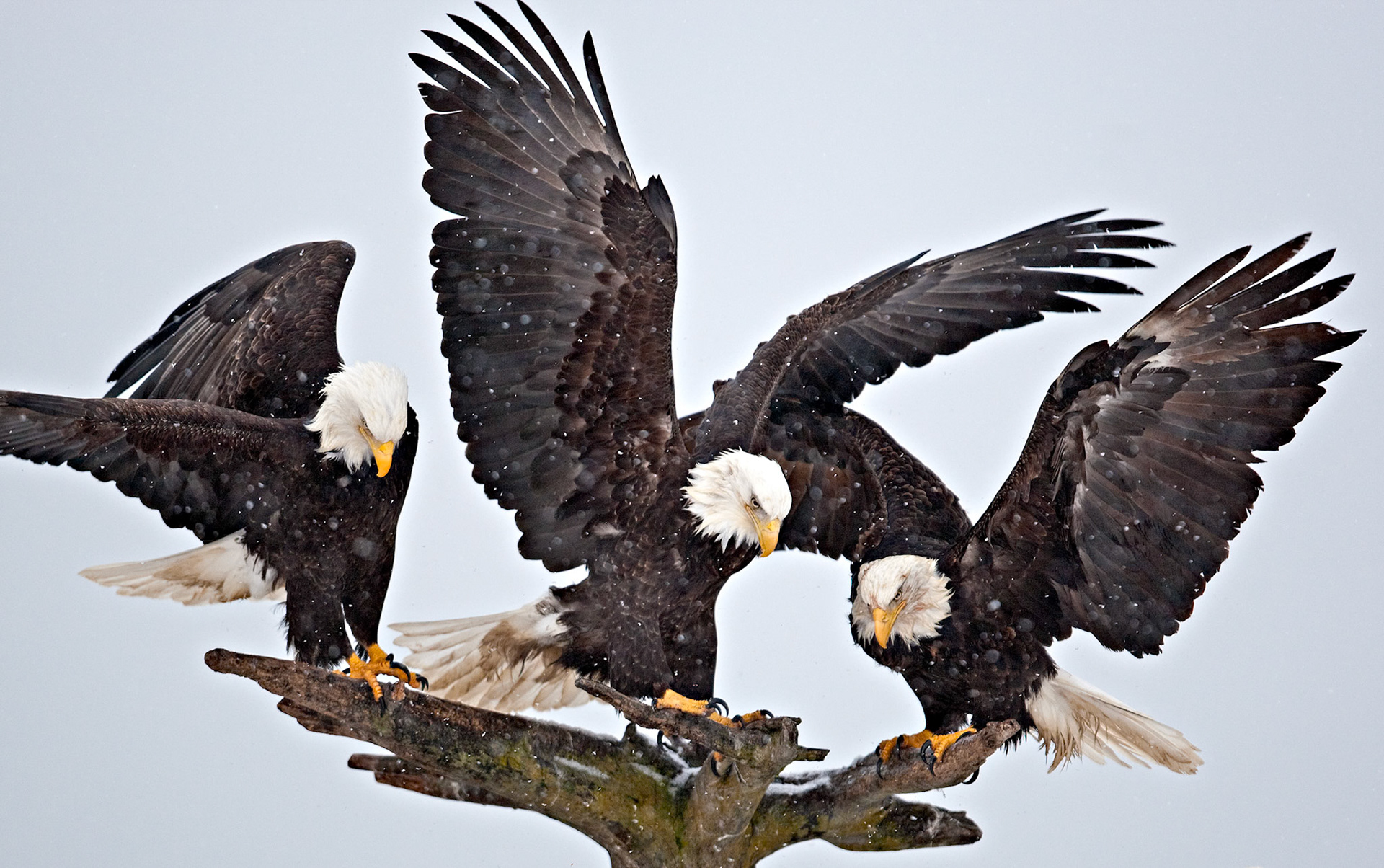
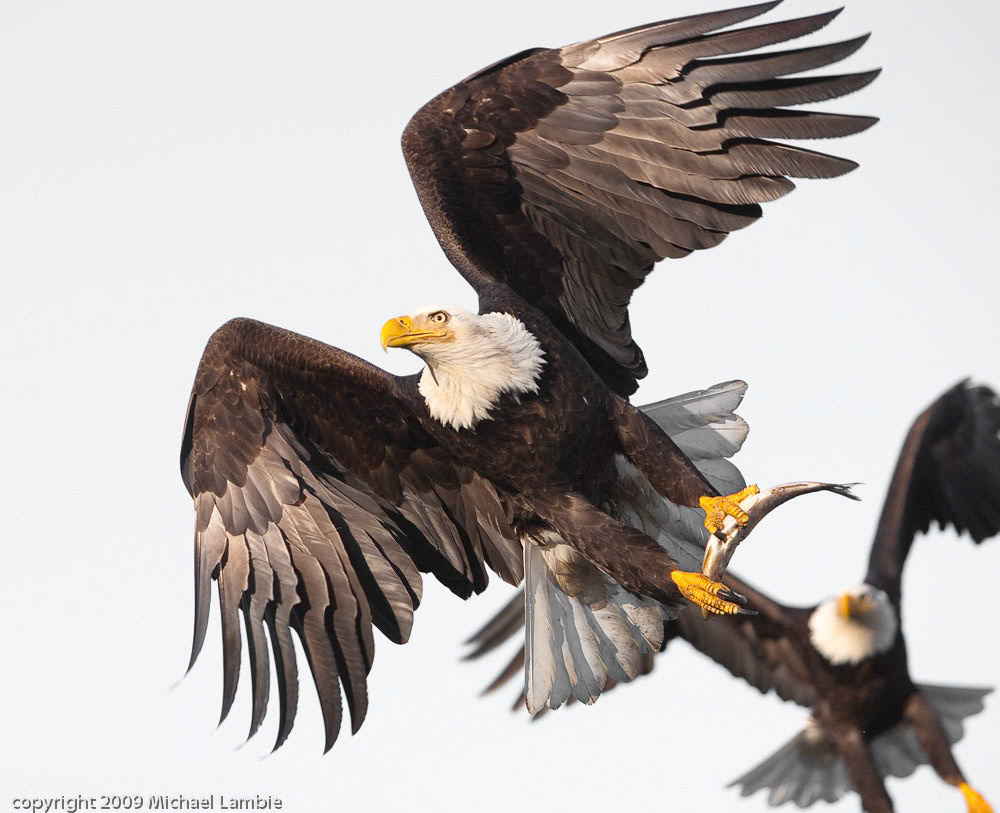
I took advantage of what I knew might be my final and only opportunity to capture images of wild Bald Eagles under remarkable conditions. Jean King of Homer, Alaska had died, and with her death, would end the annual ritual of feeding the Bald Eagles through the winter months.After 35 years of receiving fish, and respect, in this tiny area of Alaska during the long, cold winter, the eagles had come to accept Jean King's house as a haven. Make no mistake, these are wild birds. Try to approach them more than a few meters from her property and they behave like any wild bird and depart immediately. However, within this one tiny area, you had opportunities to watch and photograph wild eagles from minimal distances.It was snowing this morning as the eagles congregated in anticipation of their morning fish handout. On occasion, their timing can be incredible and all 3 of these eagles to to land on the roost almost simultaneously. It was a rare opportunity to capture each bird with their wings spread.Species: Bald Eagles (Haliaeetus leucocephalus)Location: Kachemak Bay, Alaska, USA
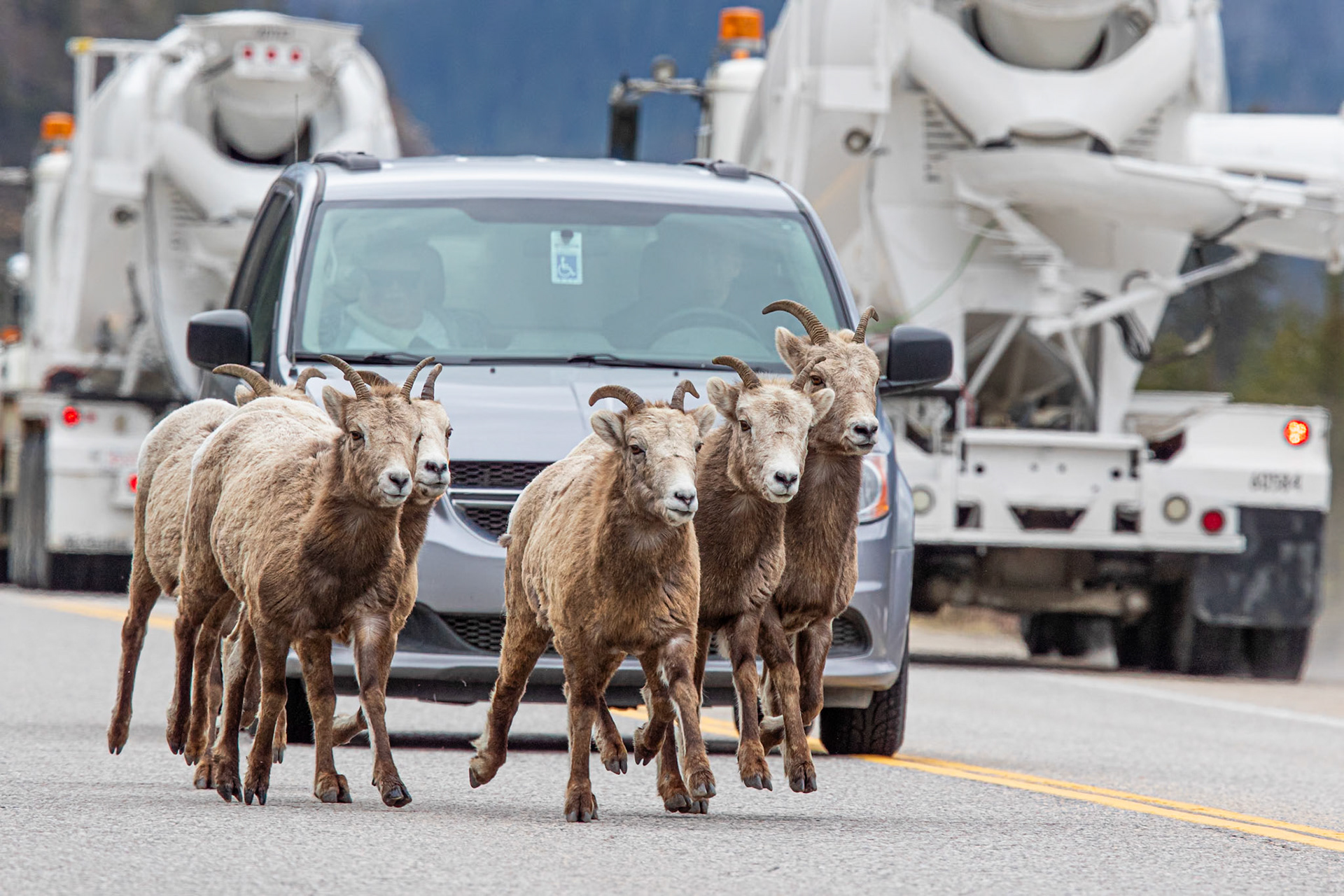
Golf Hazard
Childhood Fears
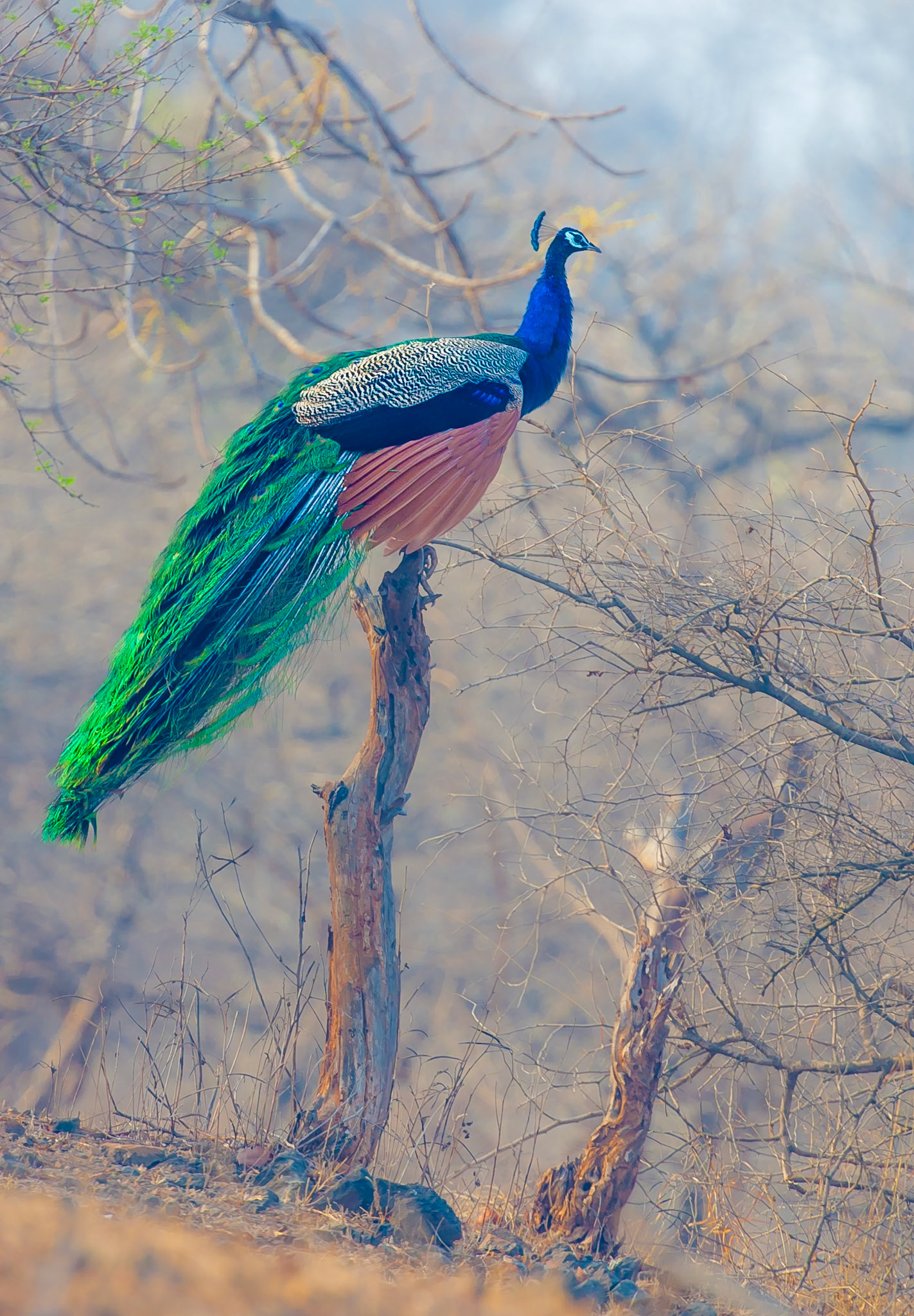
As a child, I can remember that any zoo we went too, the peacock was a pervasive wanderer. Never in acage, I just assumed it was a native to North America - I just never knew where. With those childhoodbeliefs firmly embedded in my subconscious, I found it strange to see them wandering in their true home,India. We watched these magnificent birds "strut their stuff" in each of the national parks that we visited,however the images I captured never quite seemed to do them justice.However, on our last drive through Gir National Park on our last day in India just minutes from the gates Icalled out for our driver to stop. In the distance to our left was a peacock, not on the ground where youtypically see them but perched atop a dead stump of a tree with its breeding plumage flowing behind it. Igrabbed my longest lens and added an extender, I was going to need it. Balancing the long long lens onthe side of the gypsy, I managed only a couple of images when the peacock left its perch anddisappeared into the Indian scrub.The image captures not only the peacock's incredible array of color but also the environment in which itlives and while it is certainly capable of standing out in its environment it is easy to see how it can easilyblend into it as well.
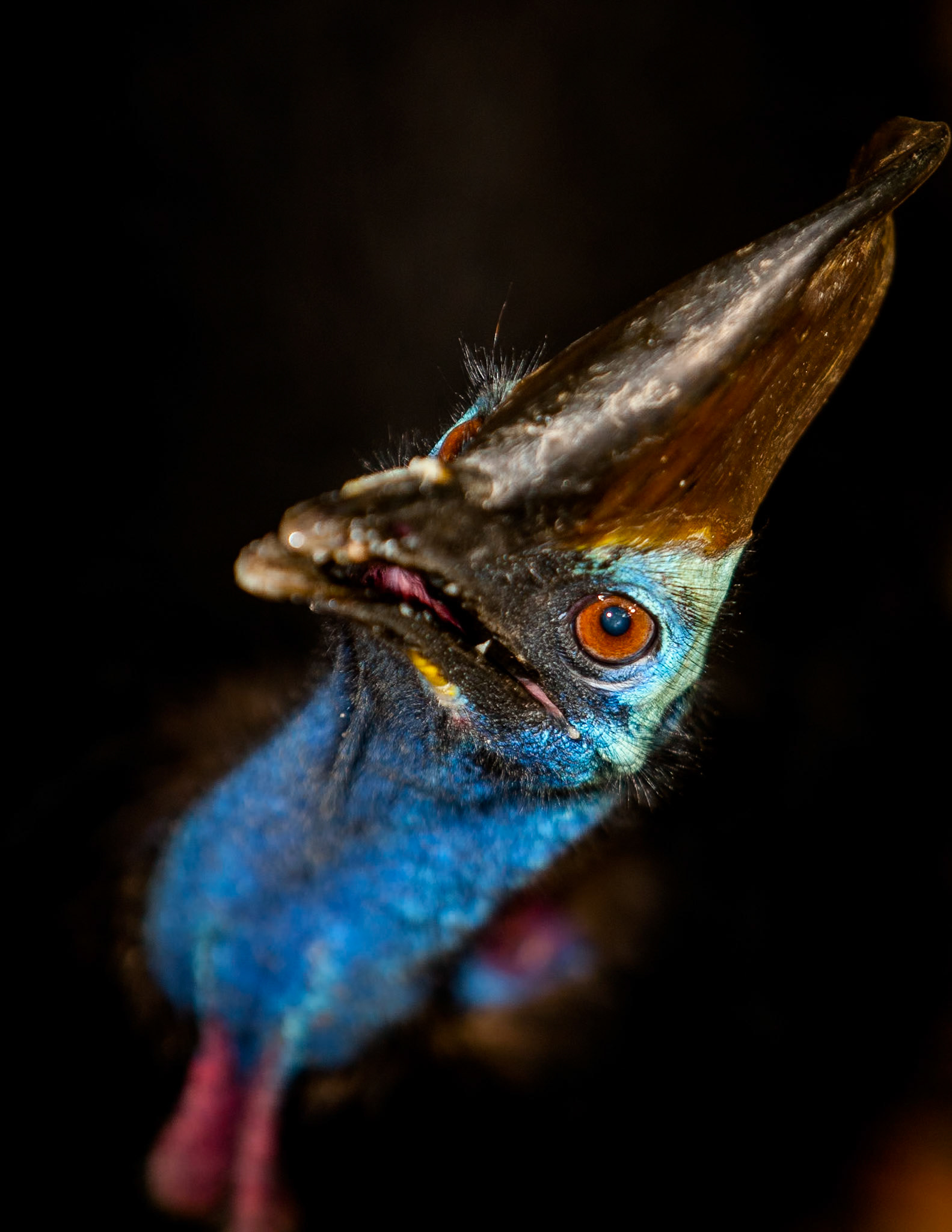
Worlds Most Dangerous Bird
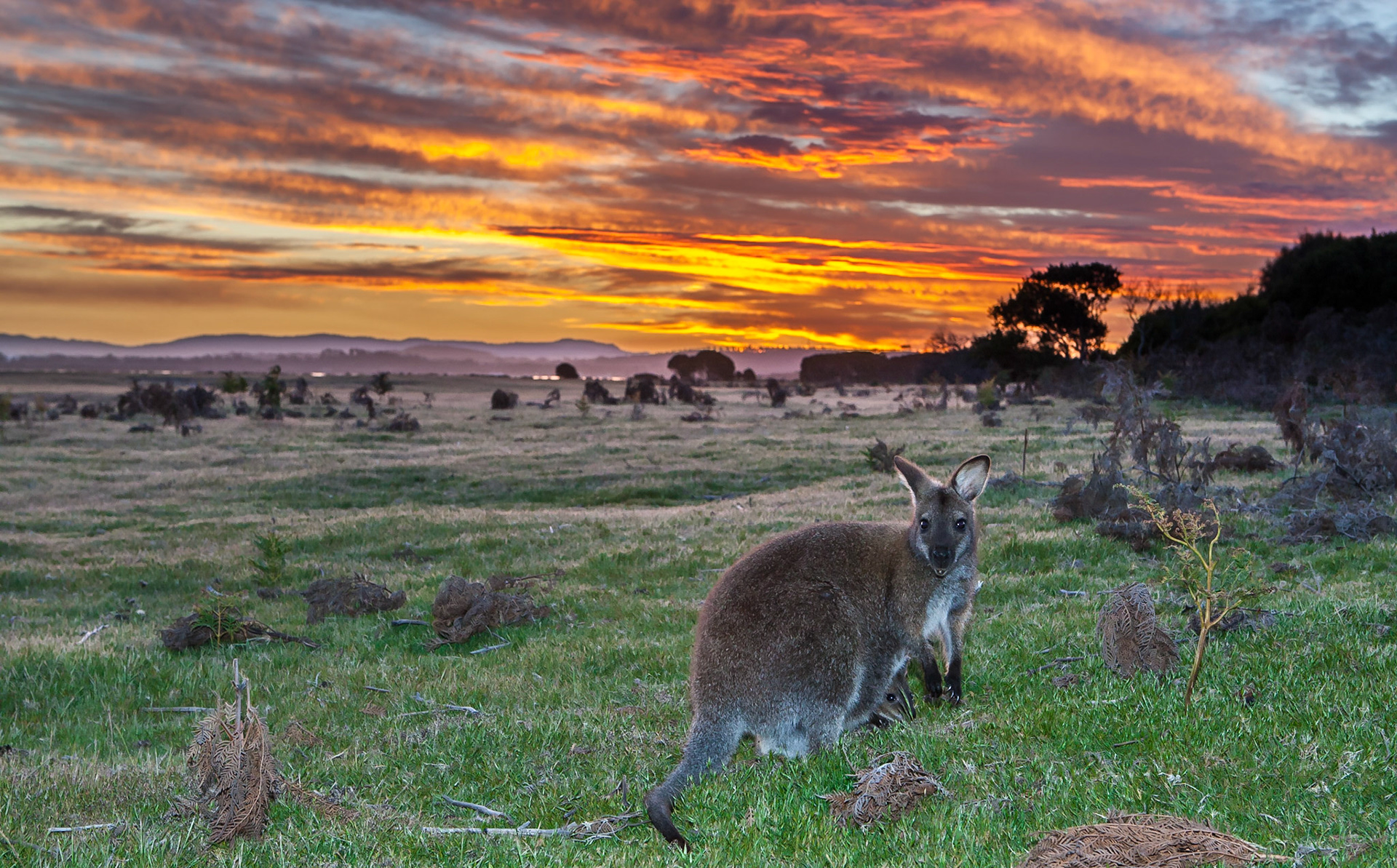
Wallaby at Sunset
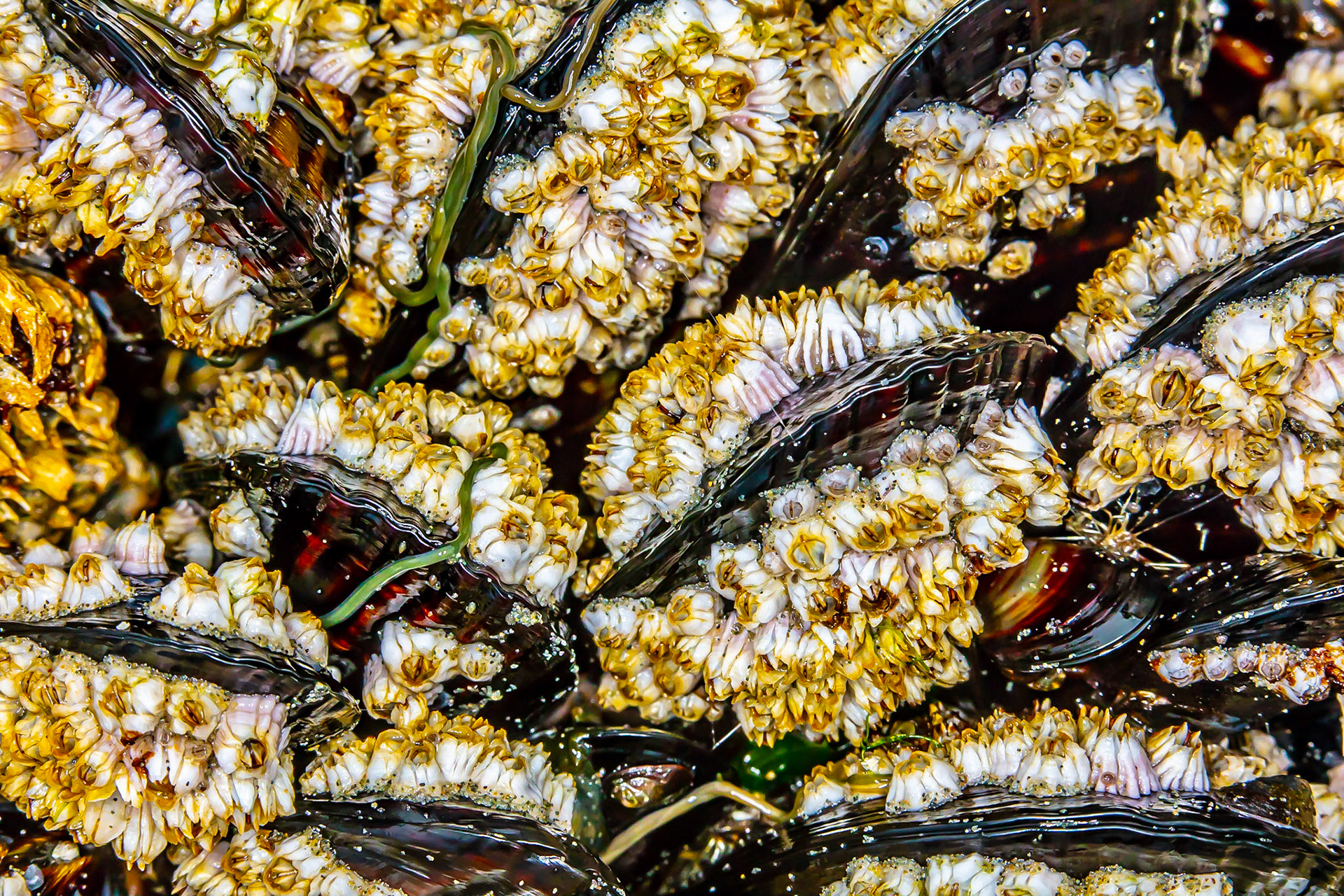
I took this image in 2018 and it has always stuck with me in a quiet way. It isn't loud but it captures life thriving in the tidal zone of the Pacific Ocean, Clayoquot Sound. This was three years before the heat dome hit British Columbia and while it is more common to talk about the few hundred human lives lost, it resulted in the deaths of billions of creatures that played no part in creating the world of climage change that we now exist in. The rock face where this image was taken is now largely bare, wiped clean by the daily tides that have stripped away the dead. Maybe there will be new life but with longer and hotter summers, it doesn't appear that this will be any time soon. The cycle of life is broken.
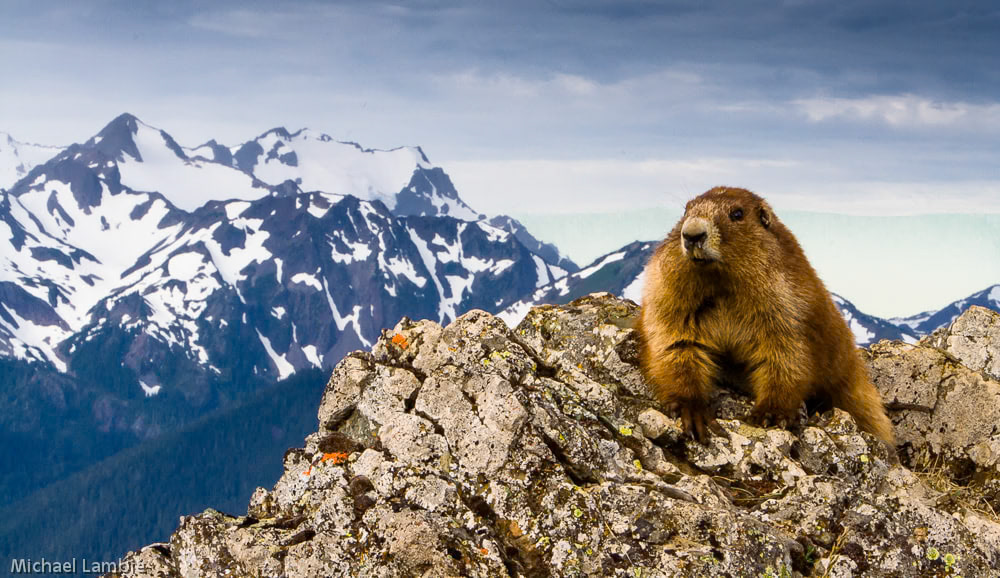
Olympic Olympus
Where's Your Competition?
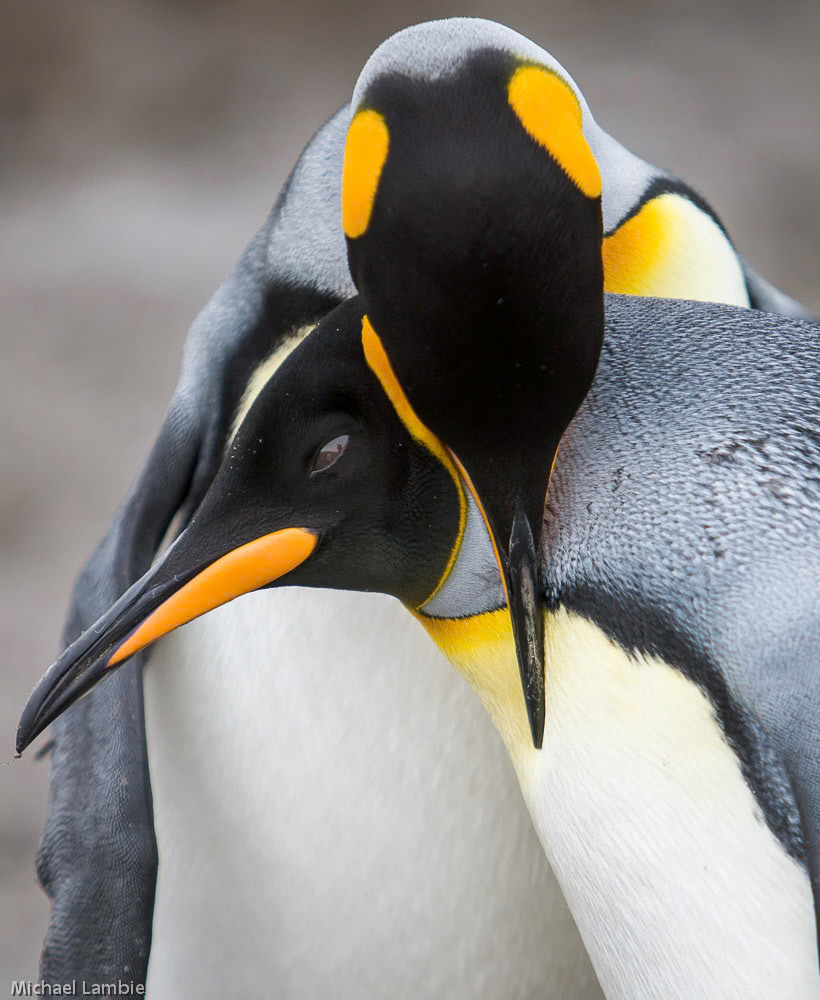
I consider myself very fortunate to have been able to visit and photograph on South Georgia island. To be able to watch wildlife which is unafraid of humans is such an unusual and welcome experience. Salisbury Plain is a very busy place for penguins between dealing with neighbors and taking care of chicks so I was lucky to capture this moment between two King penguins.
species: King penguin
location: Salisbury Plain, South Georgia Island
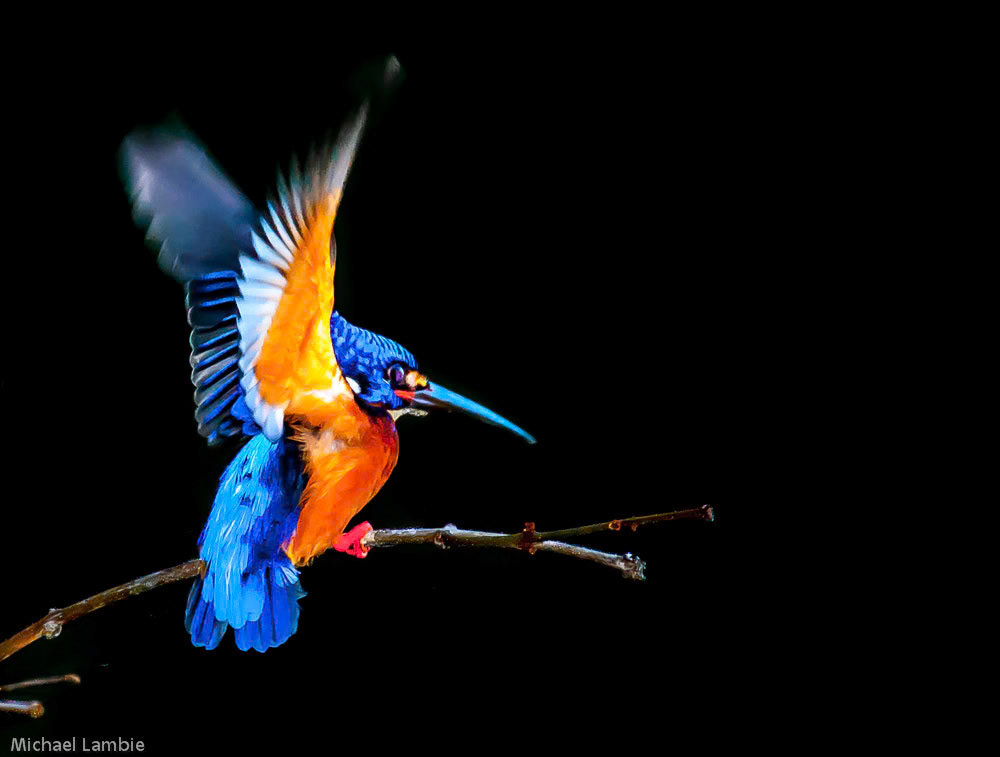
Blue Eared Kingfisher
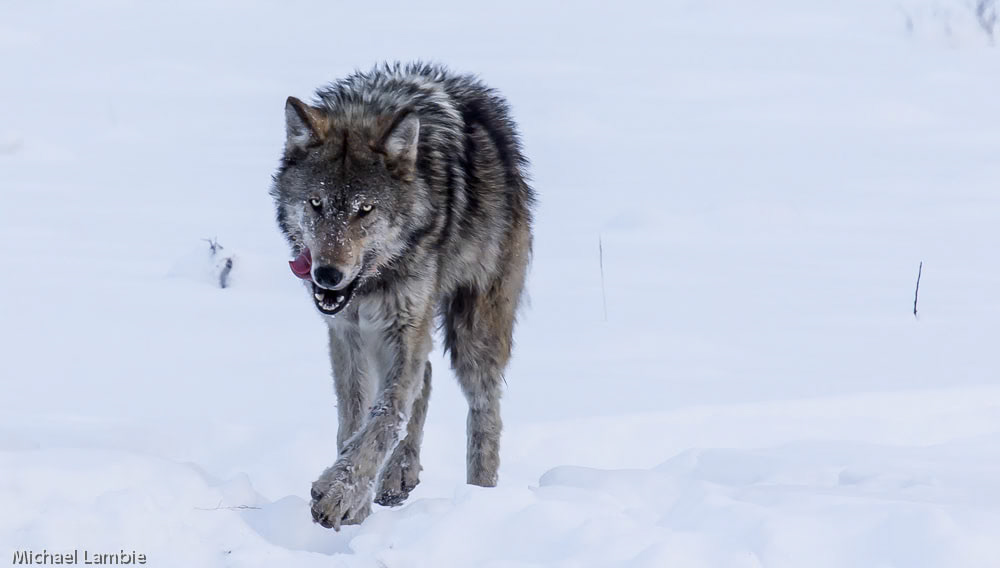
The dominant female of the Yellowstone Lamar pack heads back to the den after finishing off an elk leg on her own
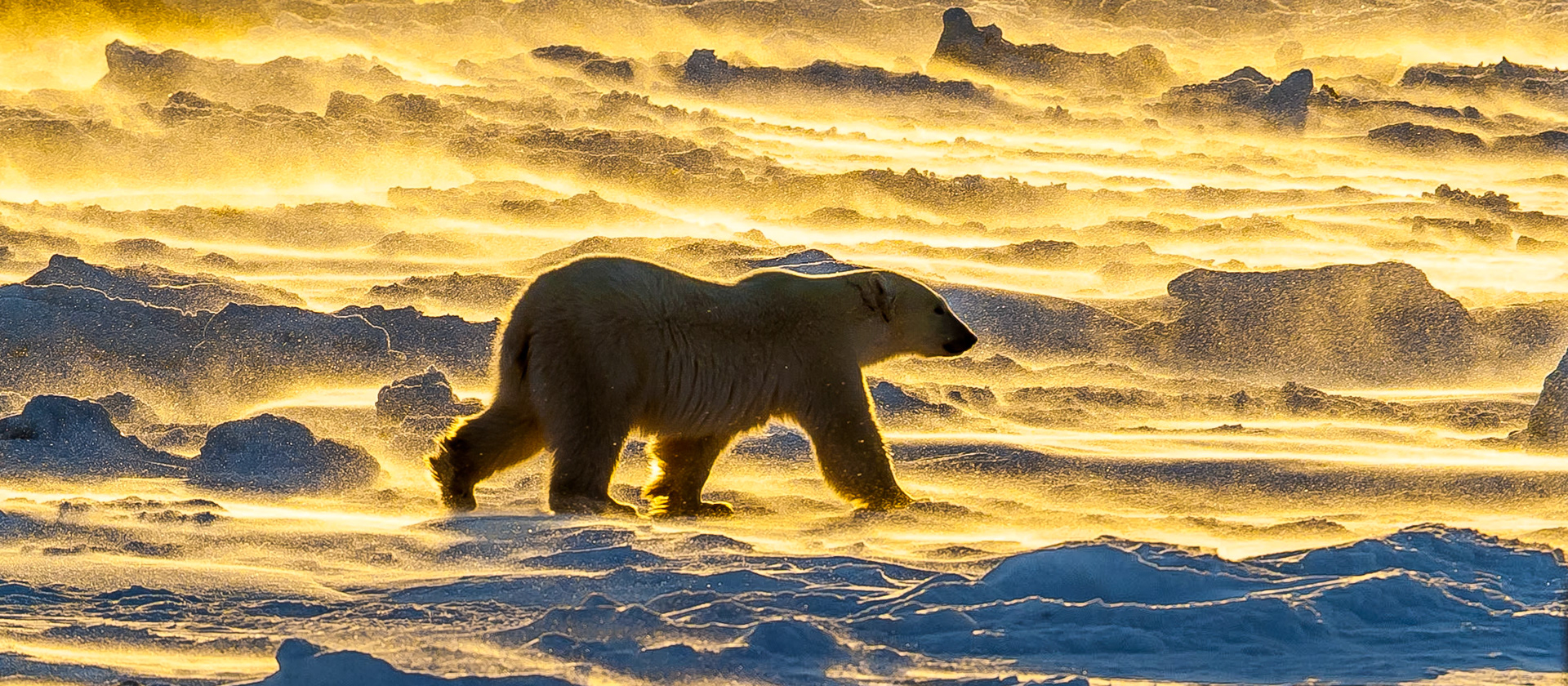
I was warned before leaving, its November. The skies will be cloudy or it will take hours for the sun to burn the fog off. You'll see the bears, but don't expect great light. This morning wasn't anything like what I'd been told to expect. The weather was beautiful. Yes, there was a little cloud in the sky but that only added to the atmosphere, the wind was blowing but that didn't seem to matter. There was one problem however, we couldn't find the bears! After a search that felt like it took half the day, we found them all congregated in one place. There had been a rare event that night. Even with no ice, a seal had been caught and killed and the largest of the bears were in the process of finishing off the carcass while the smaller bears could only look on in frustration.While most people watched the remaining bears work over the carcass, I watched this individual leave the group and walk towards the sunlight reflecting off the blowing snow. It was almost blinding but through the camera lens and amazing world appeared of yellows and whites where the sun bounced off the swirling snow and the contrasting blues of the shadows. As luck would have it, the bear seemed to traverse the line line between the yellows and blues and I had my image.Species: Polar BearPhoto Conditions: Image taken from the back of a Tundra BuggyAdditional Equipment: beanbag
Odd Bird Out
Follow the Leader
Fire on Ice
Head On
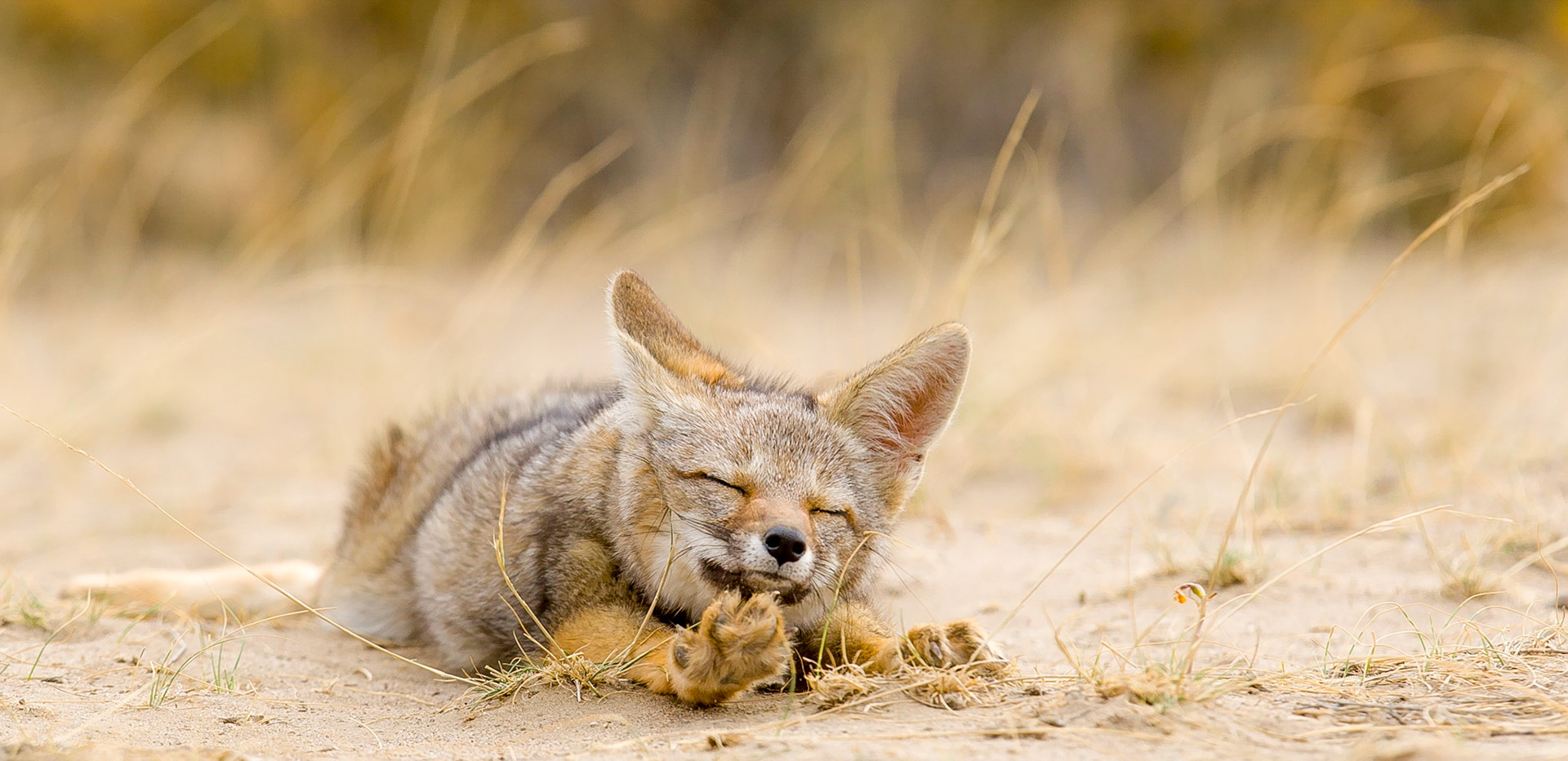
On Valdez Peninsula in Argentina, the Grey Fox patrols the low scrub looking for opportunities to capture prey. I watched this individual along with three compatriots for most of the day as they appeared and disappeared in the bush. Late in the afternoon, this individual came out of hiding for a few minutes to take in the activity on the coast. After a long relaxed stretch, he picked himself up to join his compatriots.Species: Patagonia Grey Fox
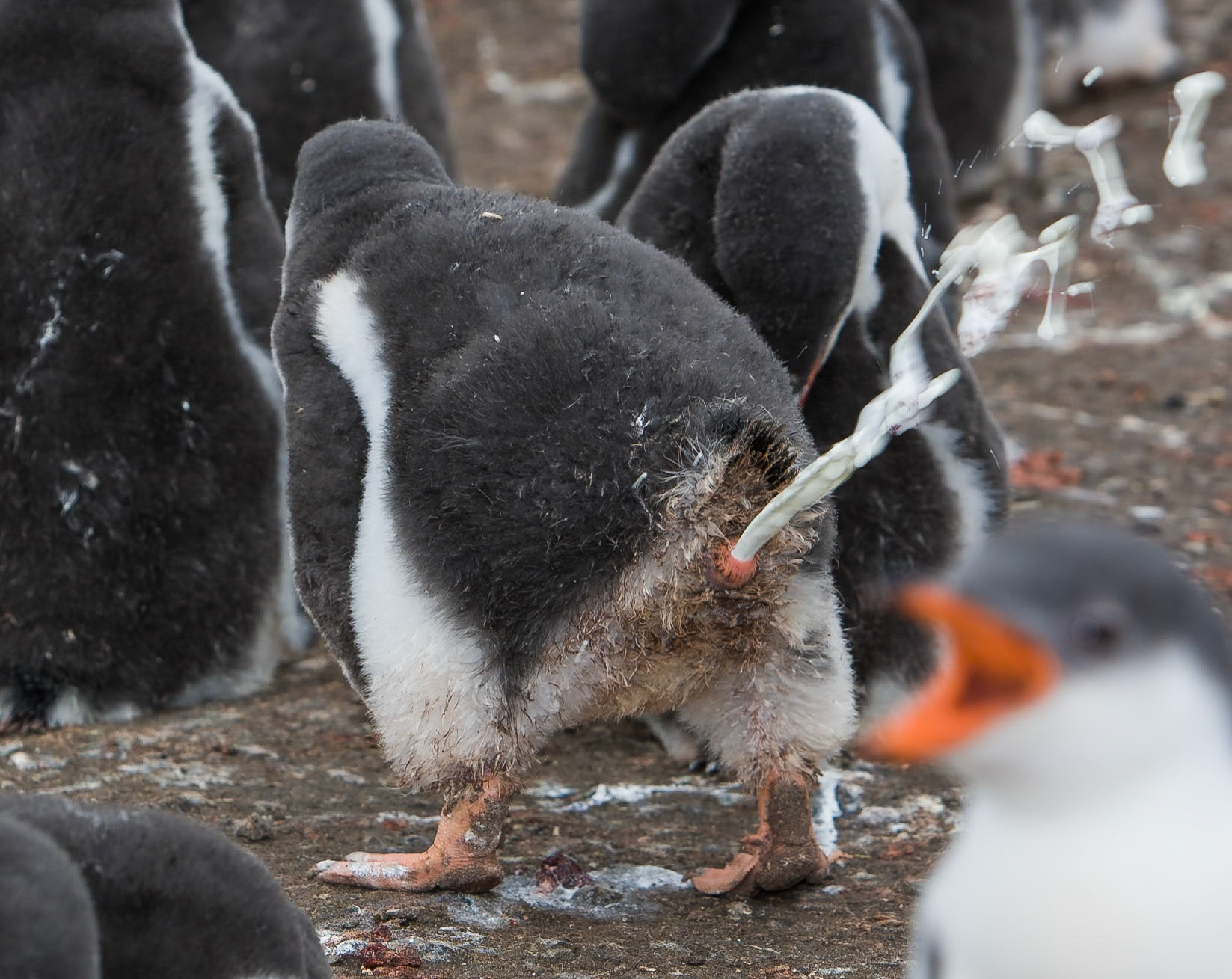
I was not prepared for penuin colonies. I'd seen all the pictures of these beautiful birds flocked together. Anyone who has been to a penuin colony knows the truth. Its messy, very, very messy with droppings from chicks and parents everywhere. This was a very lucky shot. Usually it was impossible to determine when a penguin was about to relieve themselves. In this case, something in the body posture indicated that this chick was ready. I had only just pointed the camera at the bird with no time to set up so I was extremely lucky with the result. The Gentoo in the lower right completes the image as it runs for safety.Species: Gentoo PenguinsLocation: South Georgia Island, Antarctica
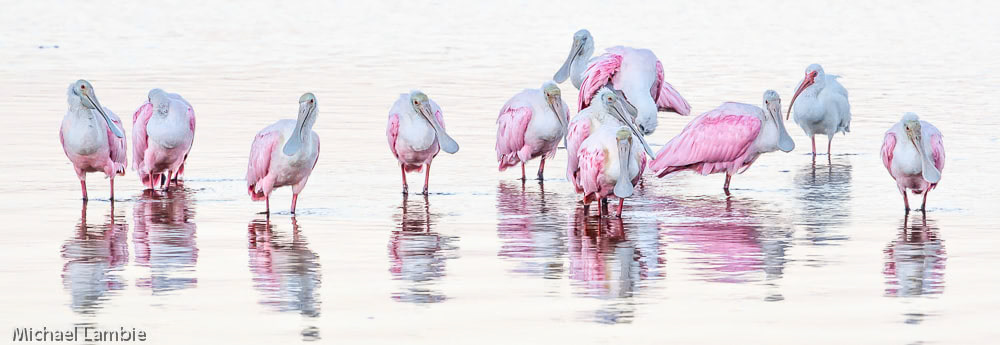
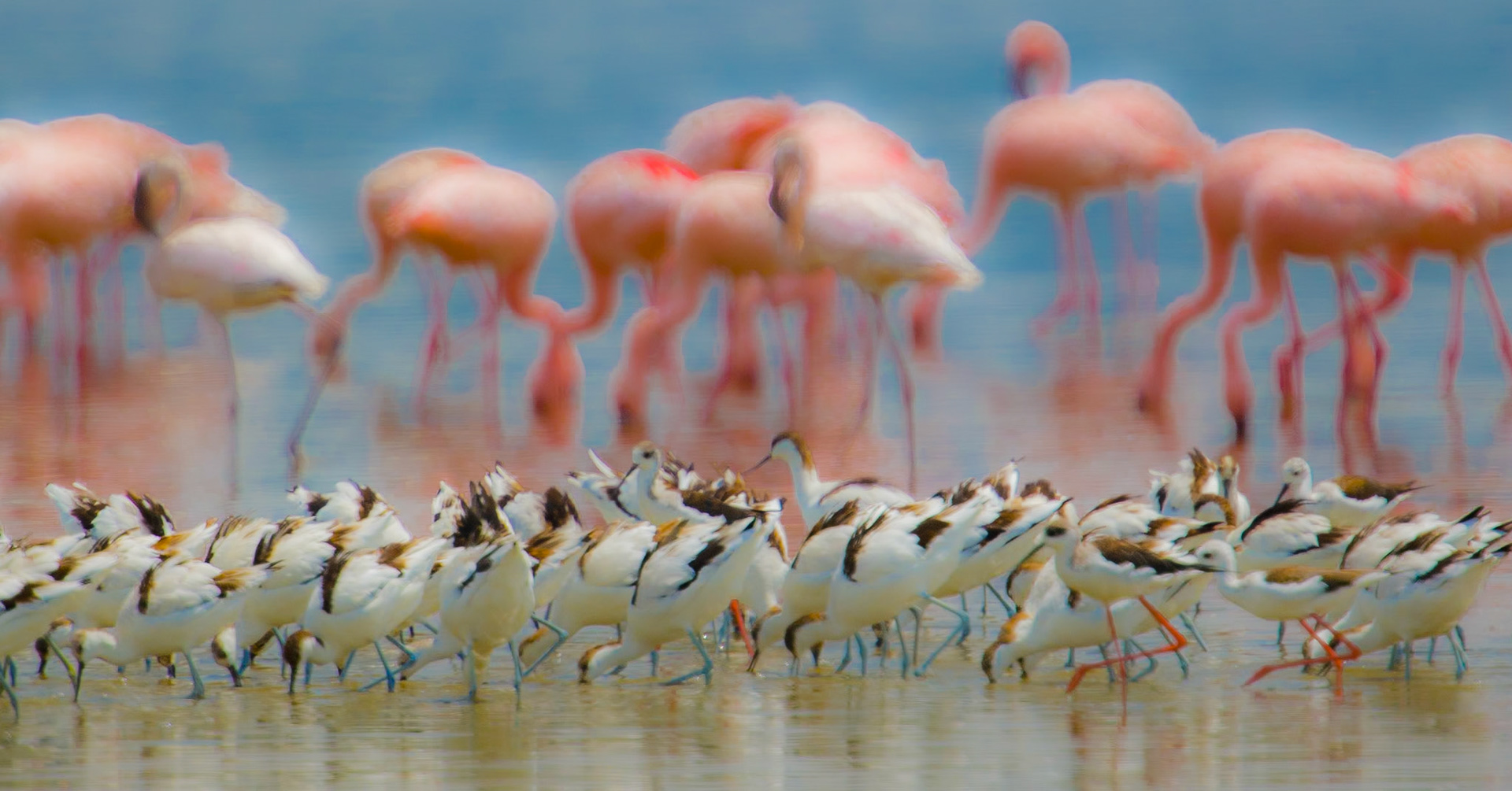
Avocets and Flamingos
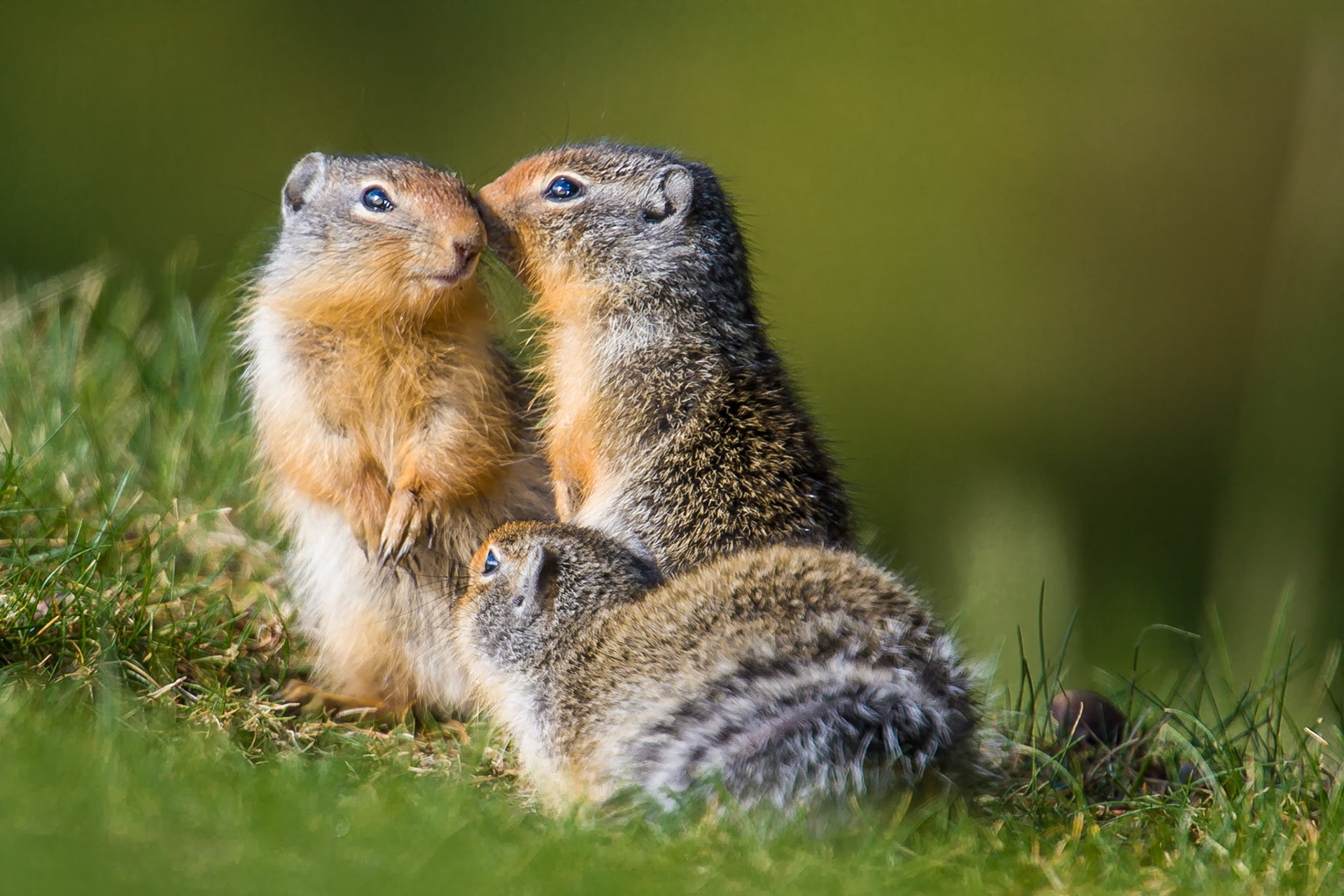
upon requestspecies: Columbia Ground Squirrel
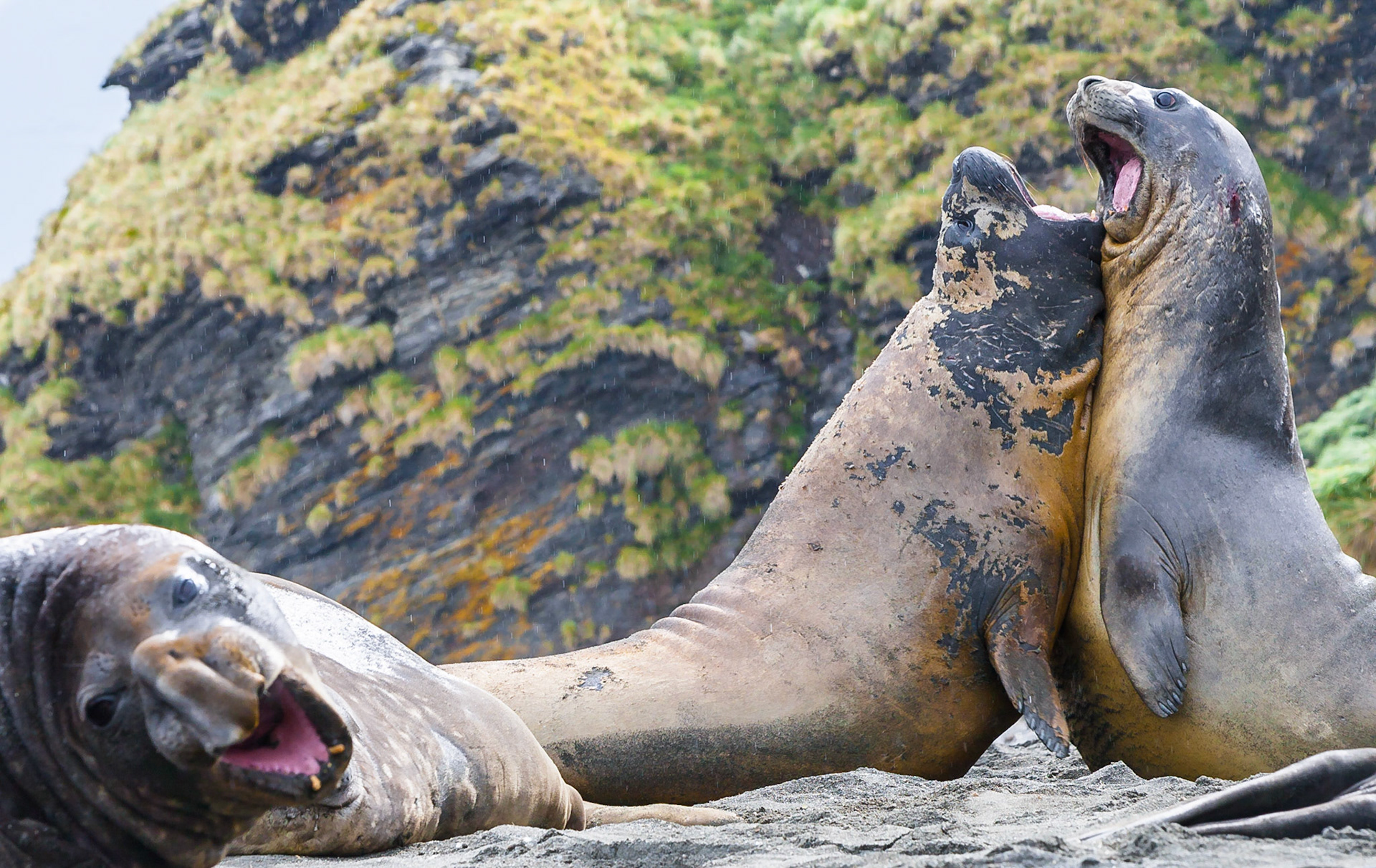
Beachmaster Brawl
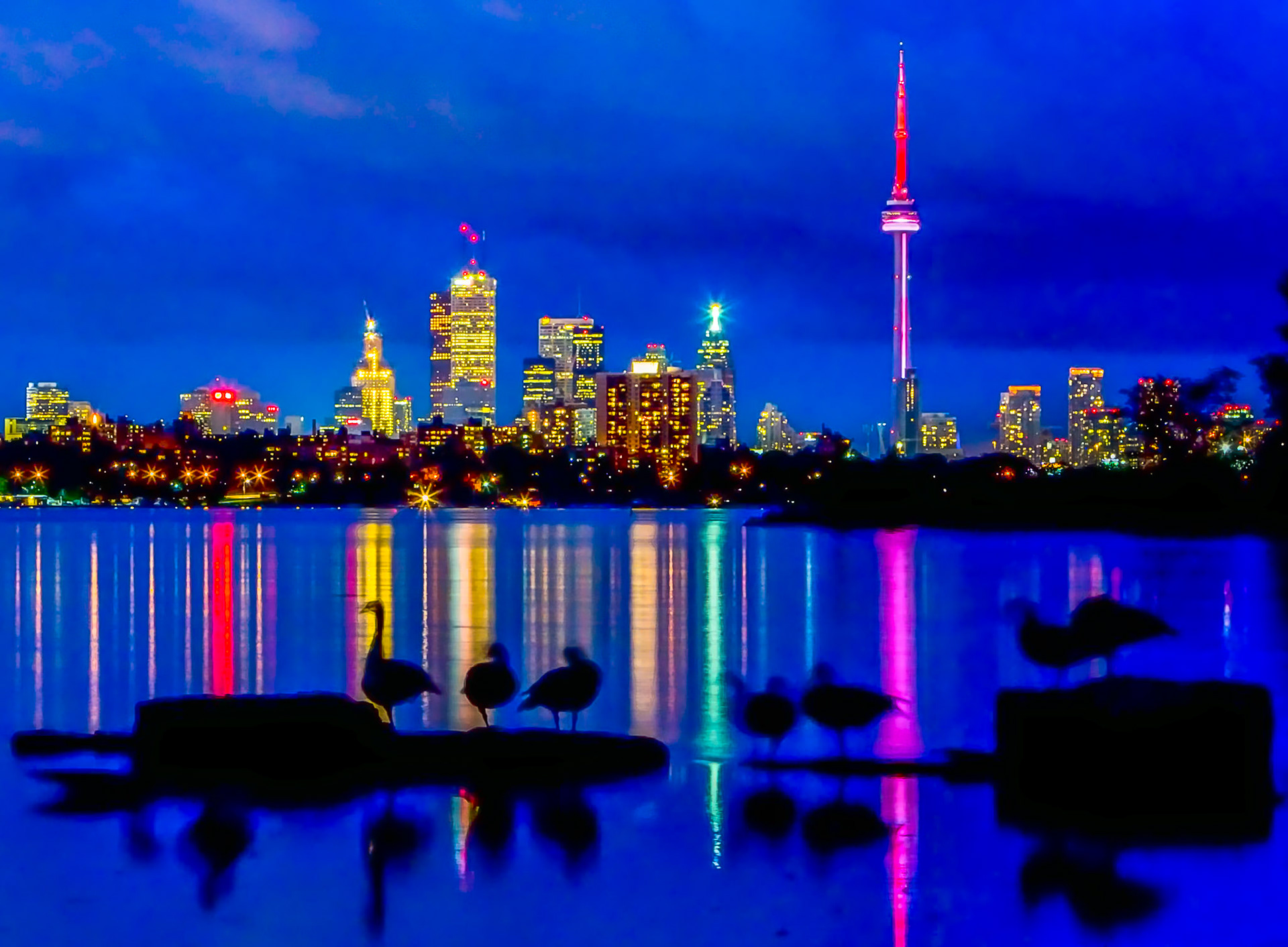
In Toronto and there is a waterfront park that actually looks back on Toronto's well known skyline. The area has extensive concrete structures built to protect the shoreline from ice in the winter. Luckily there was one break that provided a good view back on the city and Canada Geese, as part of their evening circuit, would go through this opening shortly after sunset. Occasionally they would stop at the rocks to preen. On my last visit to the city, I found this once picturesque area filled in with concrete and rubble and the birds no longer travelled through as they once did. As a result, one of the few places where wildlife and a city view could be combined is now gone.Species: Canada Goose (Branta Canadensis)Location: Toronto, Ontario, Canada